Thai director Nontawat Numbenchapol’s independent documentary Boundary appears to have met one.
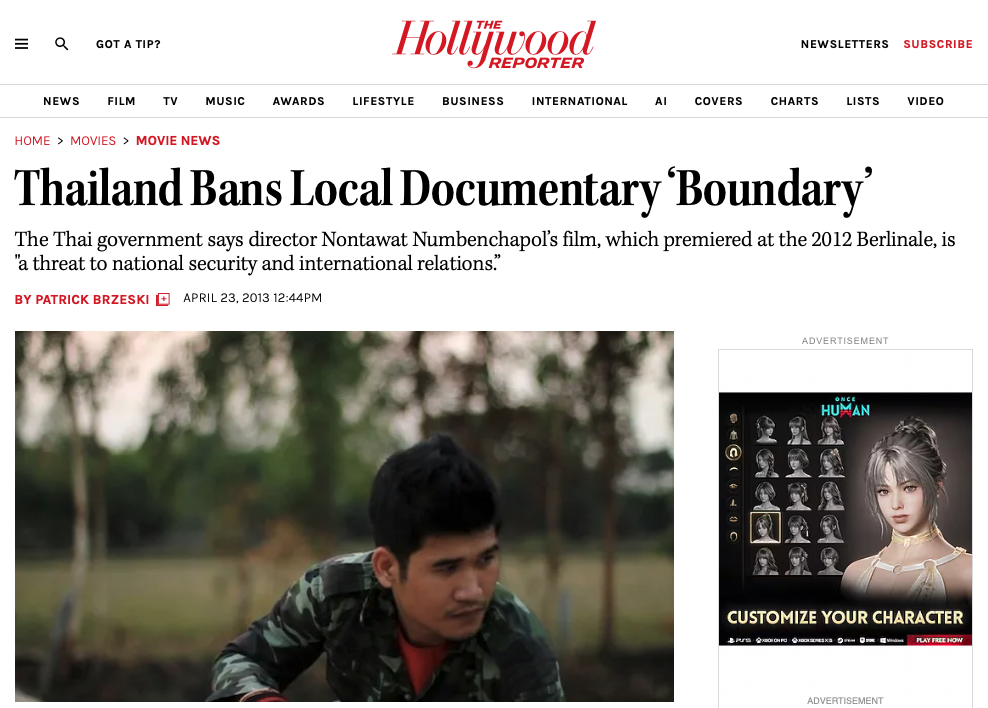
The Thai government announced a countrywide ban on the film Tuesday, saying its content is “a threat to national security and international relations.”
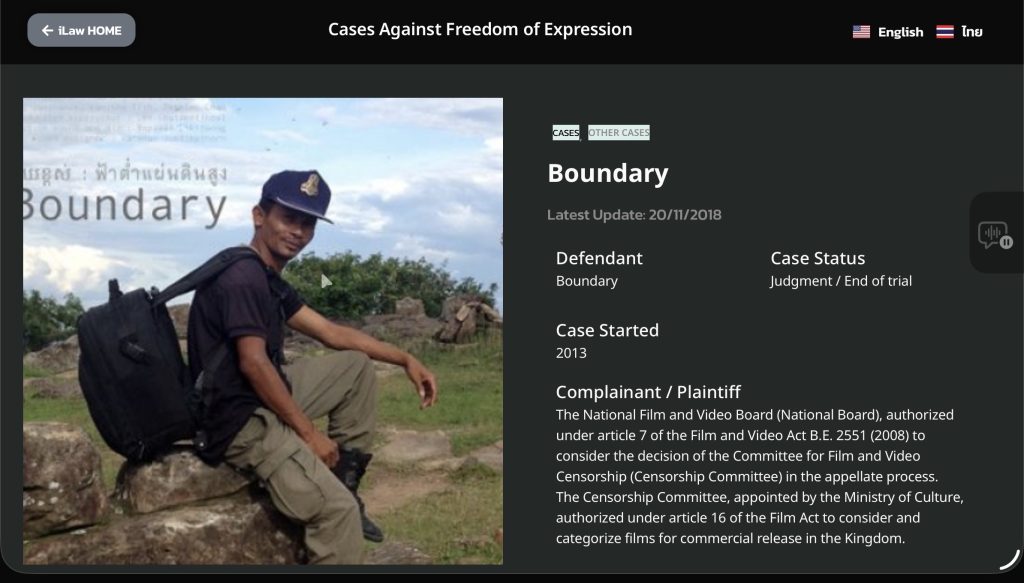
A modestly budgeted art-house doc, Boundary premiered at the Berlin International Film Festival in February. The film begins with footage of the so-called “red shirt” political protests that paralyzed Bangkok in 2010 and resulted in an armed standoff and the deaths of nearly 100 people. Nontawat then zeros in on one of the soldiers involved in the dispute and follows him to his hometown along the Thailand-Cambodia border, an area that has long been the focus of an occasionally violent border dispute between the two countries.
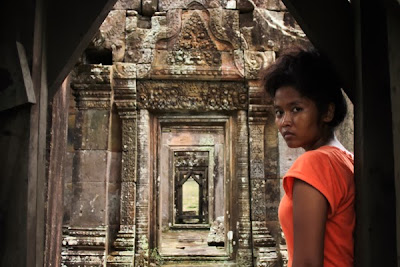
Conversations between the soldier, Nontawat and Cambodian and Thai villagers are overlaid upon scenes of the rural countryside, glimpses of damage wrought by the conflict and shots of an historic, 1,000-year-old Hindu temple, which both Thailand and Cambodia claim as their own, and which has often served as the fulcrum of the ongoing border spat.
On April 15, the UN’s International Court of Justice began a hearing over the temple and the surrounding area depicted in Boundary. Fighting in the region left 18 people dead and thousands of villagers displaced in April 2011. Thailand and Cambodia both made their cases for claim to the territory last week and are currently awaiting the UN high court’s decision, hoping for a resolution. Apart from the territorial issue, relations between the two countries are mostly positive, and they remain strong trading partners.
“I really didn’t expect this film to be banned,” Nontawat told The Hollywood Reporter. “Everyone I’ve spoken with who’s seen it says the film shows the point of view of every side, and that the film is neutral. My intention was to let the film be a space for the people in the troubled territories to voice their views and feelings to the outside world — which they haven’t had a chance to express in other Thai media.”
Referring to either the Red Shirt protests from 2010, or the border dispute with Cambodia — or both — the Thai Ministry of Culture division that issued the ban, added: “The film presents some information on incidents that are still being deliberated by the Thai court and that have not yet been officially concluded.”
Representatives from the Thai government were not immediately reachable for comment.
Thailand has a ratings classification system, but films can still be outright denied for mass consumption. Such bans are relatively rare, but there have been notable incidents, such as the barring of Palme d’Or winner Apichatpong Weerasethakul’s Syndromes and a Centuryin 2007, and Tanwarin Sukkhapisit’s Insects in the Backyard (2010), a drama about a self-destructive transsexual raising two teenagers who turn to prostitution. More recently, Thailand banned local director Ing K‘s Shakespeare Must Die (2012), which was billed as a Thai adaptation of Macbeth with contemporary political overtones. At the time, the government said its content “causes divisiveness among the people of the nation.”
Hollywood has fared comparatively better in recent years. Despite some local outcry over the Hangover 2’s stereotypical portrayal of the country as a place of prostitution and seedy intrigue — along with a fight scene set in a Buddhist monastery, which some in the Buddhist-majority country found blasphemous — the film was given the official thumbs-up for screening.
Nontawat says he and his producers were planning a limited release for Boundary at a few independent cinemas in Bangkok. The director says he now plans to appeal the ruling with the country’s National Film Board, but he is not optimistic for a reversal.
“Before Boundary, Insects in the Backyard and Shakespeare Must Diewere banned, and they both went to the administrative court, but they still haven’t gotten an answer,” he said. “I think it’s useless to appeal, but what else I can do?”
Hollywood Reporter…