Lastly, I hope Thai audiences tune in. Every second is gripping, it’s even fun to watch while ironing! Don’t miss it.
August 2026
Lastly, I hope Thai audiences tune in. Every second is gripping, it’s even fun to watch while ironing! Don’t miss it.
July 2026
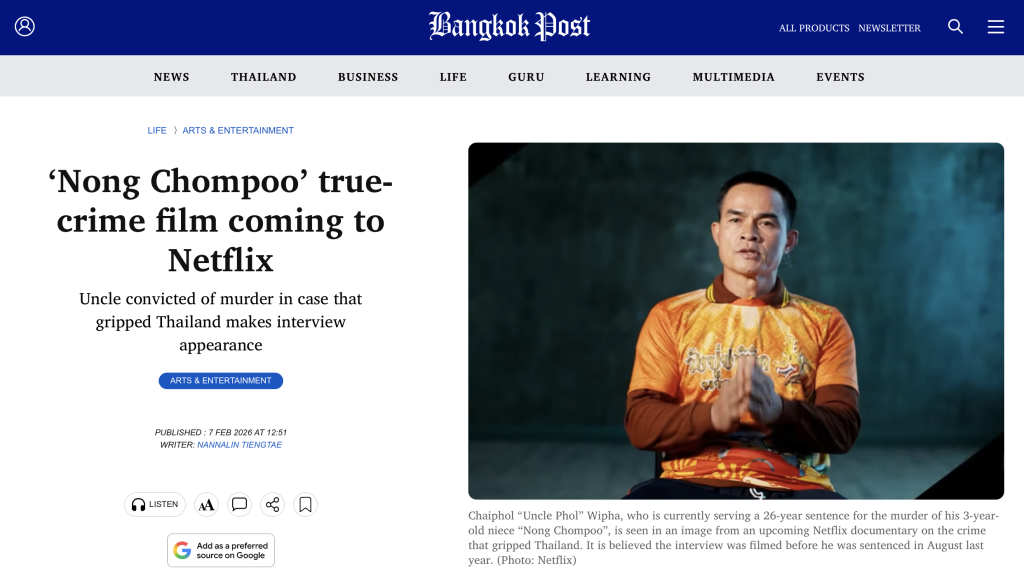
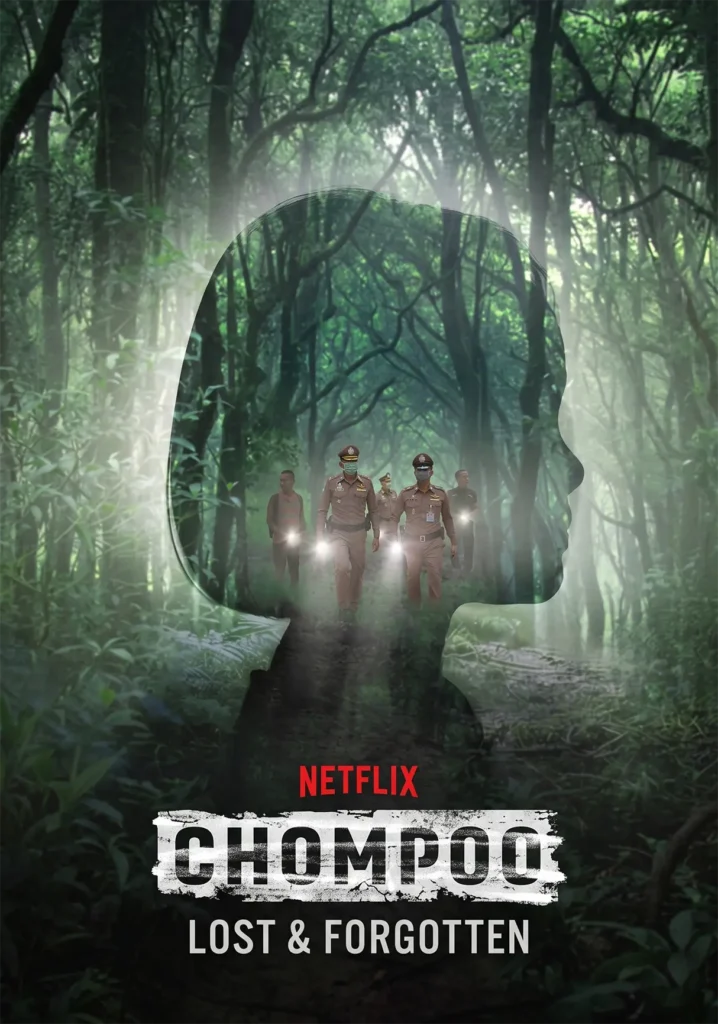
The case of 3-year-old Nong Chompoo, who was found dead on a Mukdahan mountain six years ago, will be the subject of the first true-crime documentary by Netflix Thailand, with her uncle-in-law, the convicted killer, making an unexpected onscreen appearance.
Netflix Thailand unveiled its 2026 programme lineup on Friday night, closing with a documentary titled Chompoo: Lost & Forgotten.
What surprised the audience most was the screen appearance of Chaiphol “Uncle Phol” Wipha. His interview footage was believed to have been filmed before the Court of Appeal sentenced him to 26 years in jail in August last year for the death of Orawan “Nong Chompoo” Wongsricha in the northeastern province in 2020.
He is appealing the ruling to the Supreme Court, which has denied his bail request.
The toddler disappeared from her home in Kok Kork village in Dong Luang district of Mukdahan on May 11, 2020. She was found dead three days later on Phu Lek Fai mountain in Phu Pha Yon national park, about two kilometres from her home.
The Court of Appeal found Uncle Phol guilty of premeditated murder, child abduction and concealing a body.
The appeal court upheld the lower court’s acquittal of Chaiphol’s wife, Somporn “Pa Taen” Lappho, the sister of Nong Chompoo’s mother.
‘What makes a suspect turn into a celebrity?’When Nong Chompoo vanished from her remote village, the police investigation quickly became a national spectacle. Overnight, the accused was thrust into the spotlight.
Uncle Phol consistently insisted on his innocence, and many who followed the case believed him, particularly his tearful TV interviews.
At one point, he became a minor celebrity, hired as a product presenter and featured in a music video by a famous Isan folk singer. He and Pa Taen reportedly received large donations from their “fans” and ran a YouTube channel with more than 350,000 followers.
“The film traces how a criminal investigation became a cultural spectacle and examines the forces that propelled it,” Netflix said.
Co-produced by Singapore-based Beach House Pictures and Thai Film Works, the documentary will also feature Trynh Phoraksa, a well-known criminologist specialising in psychology and criminal behaviour.
The 2026 content lineup, it said, reflects both evolving viewer behaviour and the growth of Thailand’s creative sector. Last year, more than 90% of Netflix viewers in Thailand chose to watch Thai content, underscoring its popularity, Netflix Thailand said.
July 2026
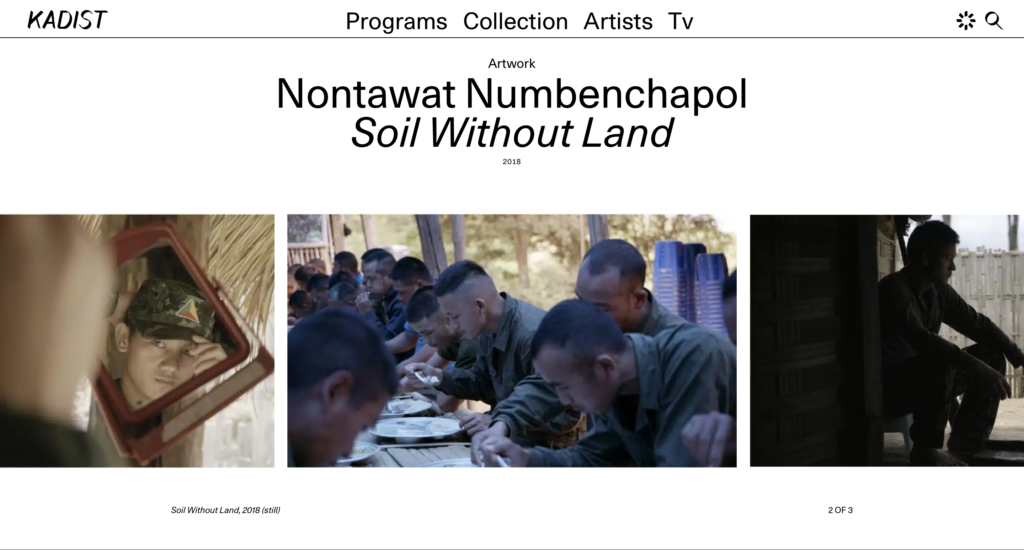
You can now watch Soil Without Land on Kadist.tv — my feature-length documentary about Jai Sang Lod, a young stateless Shan man living in a buffer zone between Myanmar and Northern Thailand, who resigns himself to a life in limbo as he trains to become a soldier for the Shan State Army.
February 2026
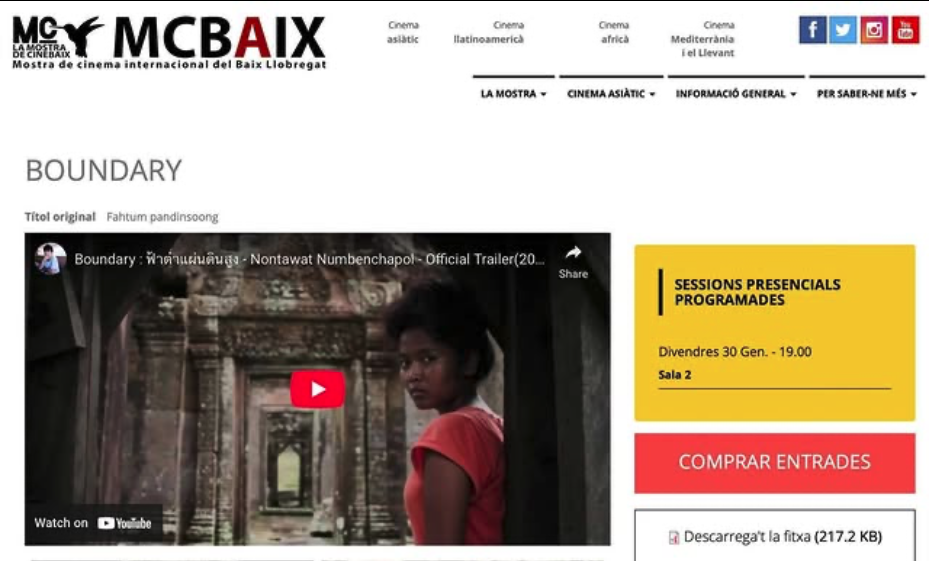
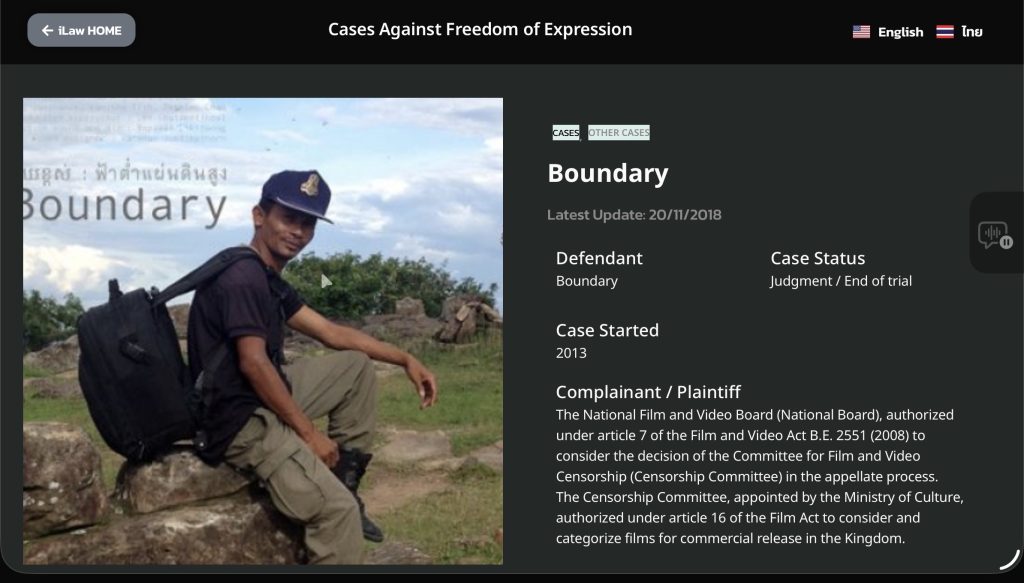
We are pleased to announce that the film Boundary (Fa Tum Pan Din Sung) will be screened at CineBaix, located in Sant Feliu de Llobregat near Barcelona.
November 2018
November 2018
October 2017

This conversation with the film director Nontawat Numbenchapol on his movie Boundary(2013), which follows a young soldier called in Bangkok to break up the “red shirts” protest (2011) to his hometown in Sisatek, a zone of conflict between Thailand and Cambodia due to the ongoing political dispute between the two countries over the Preah Vihear Temple. Boundary was funded by Busan International Film Festival and Art Network Asia. Numbenchapol received the Young Filmmaker award from the Bangkok Critics Assembly and Boundary screened across many film festivals such as Berlin International Film Festival, International Documentary Film Festival Amsterdam (IDFA), and Yamagata International Documentary Film Festival.
May 2014
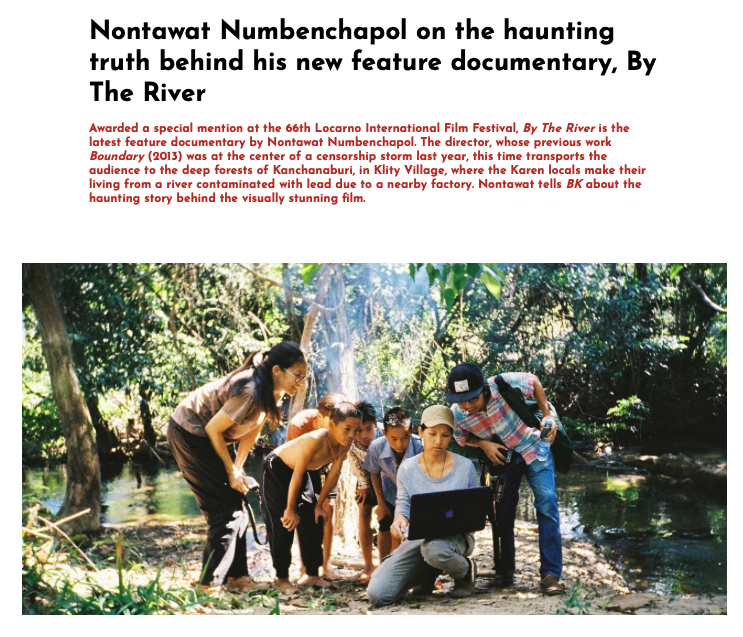
Nontawat Numbenchapol on the haunting truth behind his new feature documentary, By The River
Why did you choose Klity Village as the setting?
When planning the project, we wanted to present a kind of neutral story, something everyone can relate to. So we started research into the environmental problems facing the country. Talking with activists, we heard a lot of shocking stories. Klity Village is one example where people fought and won against a big factory and the pollution control department. We hope their victory will inspire people fighting other cases of environmental pollution. Being a small village deep in the woods, it also allowed us to work in a more controllable environment to create beautiful pictures.
How was the filming experience compared to working on Boundary?
We spent three years filming Boundary, a lot of traveling. By The River was a relatively much smaller project. It was more about adjusting to the environment, like the limited electricity and clean drinking water. Also timing and planning was essential to get the footage we needed.
We first thought we’d see the villagers with some sort of deformity, but they look just normal. Yet beneath that, everyone’s blood is contaminated with lead. Likewise, under the clear water at the bottom of the river, there’s lead, which is a heavy metal. The villagers’ diet relies on fish from the river, so it affects the children’s brain function. Most of the elders who experienced the problem at its peak are dead, while some are now living with blindness.
Filming was divided into two phases; when we returned to Klity for the second period, we found our lead character had passed away. That had a big impact on the film: as you can see, it gets heavier, gloomier and has a haunting feel to it.
Does your background in graphic design contribute to the visuals in your films?
It does a lot. Studying visual communication design, I know precisely how to compose, leaving me with the camera techniques to work on. Now that I know my way around the camera and shooting, it’s become easier to accomplish the shots. I also worked with Withit Chanthamarit [emerging photographer whose work recently exhibited at Speedy Grandma’s Inhabitation exhibition], who shares a similar photography style, on set. Cinematography-wise, it’s almost like still images: static but moving.
What do you think of the general perception of documentaries here in Thailand?
It’s better than last year. But most people are still stuck with this picture of a TV documentary, with a lot of boring talking heads. But if we look globally, it’s evolved a lot. Maybe it’s down to more access to equipment which allows more people to work. It’s exciting now; the challenge of making a documentary is in how people are competing in altering the form of a documentary, playing with the form structure, almost redefining it, like The Act of Killing or The Missing Picture, which are much acclaimed by critics. I hope the trend will soon arrive in the mainstream here, too.
December 2013
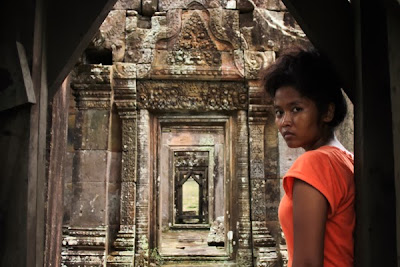
What’s it about? The Cambodian border conflict around Preah Vihear temple is the main focus for this documentary that also surveys the colour-coded political divide in Thai society.
Who directed it? Nontawat Numbenchapol, making his feature debut with “Boundary”, which premiered at the Berlin International Film Festival.
Why’s it good? With an artful, observational style, Nontawat takes a snapshot of a timely, complex issue. Though it was well received in Berlin, at home the director had to overcome censorship issues, and his film was initially banned when he sought a commercial release. After an outcry in the social media and coverage in the international press, the ban was rescinded. But the film’s political subject caused Thailand’s Major Cineplex movie chain to have second thoughts about showing it. In the end, Nontawat had to make his limited release even more limited as he hired out the theatres and sold tickets himself, shepherding the film around the country.
December 2013
August 2013
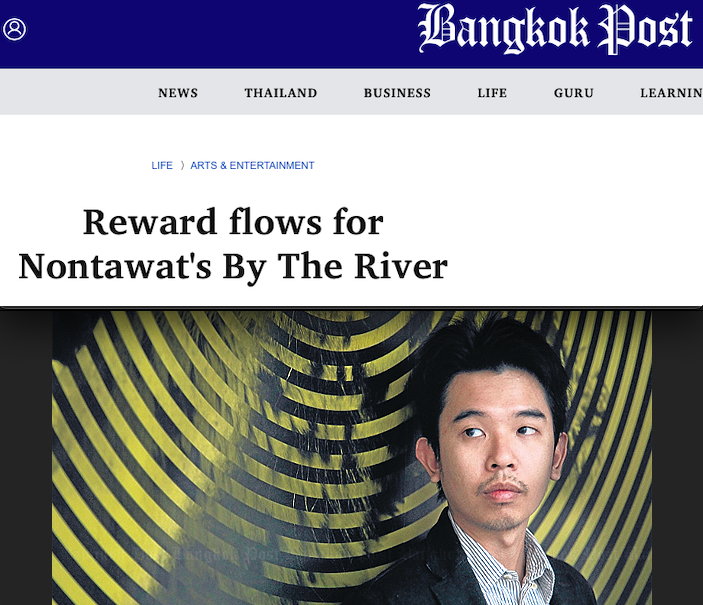
After a rough start, Nontawat Numbenchapol is enjoying a rewarding year. On Sunday, the 66th Locarno International Film Festival in Switzerland, one of Europe’s oldest cinefests and a much-respected jamboree of art-house movies, awarded a Special Mention prize to his new film By The River, which tells the story of Lower Klity village in Kanchanaburi province, where residents have been affected by lead poisoning incidents.
The film’s Thai title is Maenam Tid Chua, or literally “infected river”. The version that won the prize in Locarno runs slightly over one hour, but the film was originally conceived and broadcast for the Thai PBS channel. The television version, which aired a few months ago, was only 22 minutes long.
The director, along with his producer at Ok Pai Dern company, will explore the possibility of releasing the full version in cinemas.
The Karen village of Klity has been in the news for decades after its main creek suffered lead contamination, a disastrous result of mining since the 1970s, which has seriously threatened the lives and well-being of villagers.
After lengthy legal battles, last year the Supreme Court made an important ruling by ordering the Pollution Control Department to clean up Klity Creek.
By The River, however, tells the story with the eye of an impressionist painter: the film largely consists of tranquil, breathtaking shots of the nature around the village, with minimal dialogue that only alludes to the fatal aftermath of the environmental horror. Children play and young men in the village still go spear-fishing _ and one of them becomes the latest victim of the contaminated creek that looks so inviting on the surface.
There’s only one section of the film that captures the scenes at a Bangkok court when the Karen villagers arrive for the hearing.
This is the second Nontawat documentary film to make the news this year.
On April 30, the director found himself in one of the year’s most perplexing headlines: his documentary film Boundary (Fah Tam Pandin Soong), which discusses the Thai-Cambodian border conflict, was banned by Thai censors _ only to be un-banned and cleared for screening two days later.
The film board even apologised to the director and said a “technical error” led to its initial decision.
Boundary had a limited release in cinemas in June.
By The River won the prize in the Cinema of the Present section, which focuses on young and up-and-coming filmmakers.
_ Kong Rithdee
August 2013
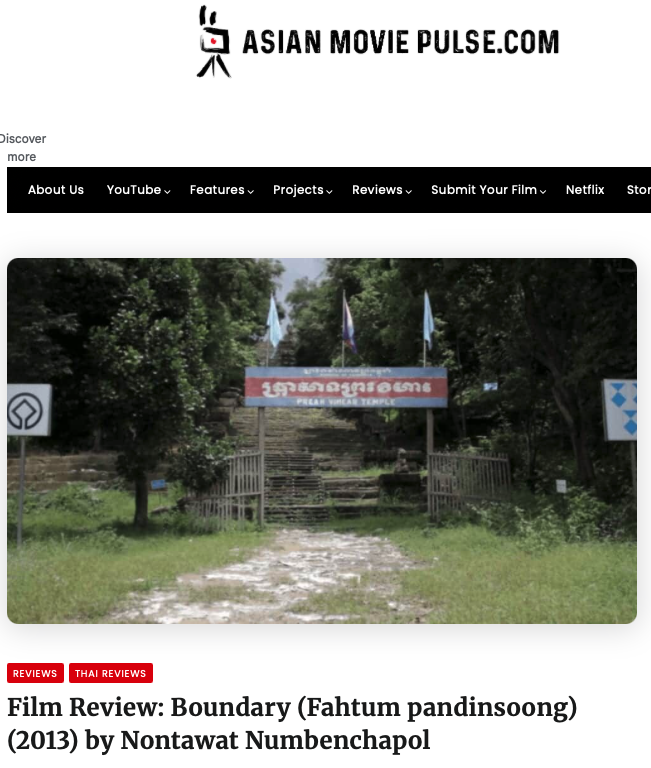
Even though one might not have the specific oversight of the political and social upheavals in Thailand and Cambodia, the story of the red shirt/yellow shirt divide and the Preah Vihear Temple-debate are symbols of a growing divide. While the former has increased the chasm between rural and urban Thailand as well as its social classes, the latter has resulted in conflicts which have shaken the border region between the two states. By the end of 2010, only months after the red shirt protests opposing the government, the social and political fabric of Thailand could not have been more damaged.
It was during this time – more precisely during New Years Eve 2010 – when Thai filmmaker Nontawat Numbenchapol found the subject for his first documentary. In a statement to his debut feature “Boundary,” the director says he was working on another project when he started thinking about the nature of boundaries and borders. However, it was not so much the geographical definition which he was interested in, but more the emotional and spiritual boundaries within society. While a celebration meant to unite people expecting the promises and possibilities of the new year, Numbenchapol saw a country more divided than ever. And while the positivism of the celebration may fade, the feeling of unrest, upheaval and violence led to the question of how deep the change had been, how visible the scars and the wounds of the past months were.
However, it was not so much the nature of his new film, but also the reaction of the state which answered this question to some extent. Because the film represented a “threat to national security and international relations,” it was banned in Thailand by the state, a rare procedure which made Numbenchapol join the ranks of colleagues like Apichatpong Weerasethakul and Tanwarin Sukkupisit, whose films had also been banned. Ironically, as many journalists pointed out, the same rating system banning these films saw no problem with films like “The Hangover Part II”, a movie whose portrayal of the country and its people is more than just problematic to say the least. Following the director’s appeal, “Boundary” was in the end re-edited with some small parts of the film in which the sound had to be muted and eventually the ban was lifted.
For a movie which is essentially about the nature of human division and the social fabric of a country, Numbenchapol’s images are often eerily static and quiet. Often combined with long takes of drives through villages, of fields and buildings as well as people moving through the landscape, a viewer may get the impression of a state of shock as the omnipresent condition of the film. Indeed, given the immediacy of the past events, the nature of the conflicts shown in the film, sometimes only present in the words of the people in front of the camera, and the seriousness of the wounds in the landscape, no one should be surprised by this condition. As the camera follows a man re-telling the story of his escape from bombings or a woman breaking out in tears having lost her home and belongings, the bomb craters in the ground reflect the emotional scar tissue of the people the movie shows.
Naturally, words are somewhat flawed in this environment. Numbenchapol’s use of long takes, sparse sub-titles and the long silences of the people he interviews represent repercussions of a long, brutal and still ongoing conflict. While some may be invisible on the surface, any attentive viewer will soon look closer at the images, the expressions and the landscape finding traces of these events and what they have left behind.
Most importantly, as the title of the film suggests, the camera looks at the nature the boundaries, physical and psychological, created in the course of time. The director follows a more universal approach concerning these matters, one which is, at the same time, closely connected to the setting of the film, but applicable to the nature of conflicts anywhere in the world. Whether it is about red shirts or yellow shirts, Thai or Cambodian, rural or urban background, there are two aspects “Boundary” focuses on: how much we admit these boundaries as a force in our lives, and to what extent outside factors (politics, religion, class) have emphasized them over time.
Additionally, the atmospheric use of sound and music composed by Katenan Juntimathorn stresses the contemplative nature of the film. Especially in the scenes showing the relationship of people and their environment, the director’s approach works best to present the traumatizing effects of the conflict, of the divide between people. At times, the somewhat helpless, sometimes hopeful expression captured in the eye of the camera may show a glimpse of the promise a new year has in store, the possibility of healing the wounds at some point in time.
“Boundary” is an impressive piece of work about the nature of human divisions, about conflict and the wounds these leave behind. While at times difficult to endure, given the nature of the images shown on screen, Numbenchapol still maintains a small glimpse of hope, a curiosity in the people and landscapes he shows. In the end, maybe it is this kind of feeling which may resolve the issue, which may bring forward what unites rather than divides people.
April 2013
Two days after Thai authorities banned Boundary, a documentary about Thailand’s festering border dispute with Cambodia at Preah Vihear, censors have lifted the ban, citing a “technical mistake”. The ban occurred as the International Court of Justice (ICJ) prepares to make a ruling over territory surrounding the 11th century ruins.
Initially, Thai film censors claimed the documentary, which was directed by Nontawat Numbenchapol and debuted in February at the Berlin International Film Festival, was a threat to national security and international relations.
Further, authorities explained that a subcommittee with insufficient authority issued the ban. After watching the film for a second time on Thursday afternoon, censors changed their tune and said they found it inoffensive. The film has since been approved for viewers of 18 years and above.
The film, Boundary, is an account of the border conflict that erupted in 2008 as told by a former soldier living in the area and villagers from Cambodia and Thailand. When fighting intensified two years ago, 17 soldiers and one civilian were killed, while thousands of villagers were displaced.
Last year troops withdrew from the hilltop in the Dangrek Mountains after a demilitarized zone was established in The Hague.
Accounts from both sides of the conflict dating back to a 1962 ICJ rulingare detailed, but apparently a sub-committee governing film and video screening dismissed some of the Cambodian accounts as groundless, adding that some of this information was still before the court.
The ICJ is expected to clarify its 1962 ruling, which ruled that the thousand-year-old temple belonged to Cambodia but failed to definitively demarcate the borders surrounding the site. The land where Preah Vihear sits was occupied by the Khmer Rouge throughout Cambodia’s long running civil wars.
Although it has been lifted, the short-lived ban of Boundary was not an isolated case. Thai censors have made similarly questionable interpretations and harsh rulings in the past.
In 2011, a movie about a transgender father trying to raise two children – Insects in the Backyard – was deemed immoral and banned, while last year a local adaptation of Shakespeare’s Macbeth was banned amid arguments that it was divisive.
Thankfully, things turned out differently for Boundary and Numbenchapol’s film can now have an audience.
In an interview with the Hollywood Report Numbenchapol said, “Everyone I’ve spoken with who’s seen it says the film shows the point of view of every side, and that the film is neutral.”
He continued, “My intention was to let the film be a space for the people in the troubled territories to voice their views and feelings to the outside world – which they haven’t had a chance to express in other Thai media.”
April 2013
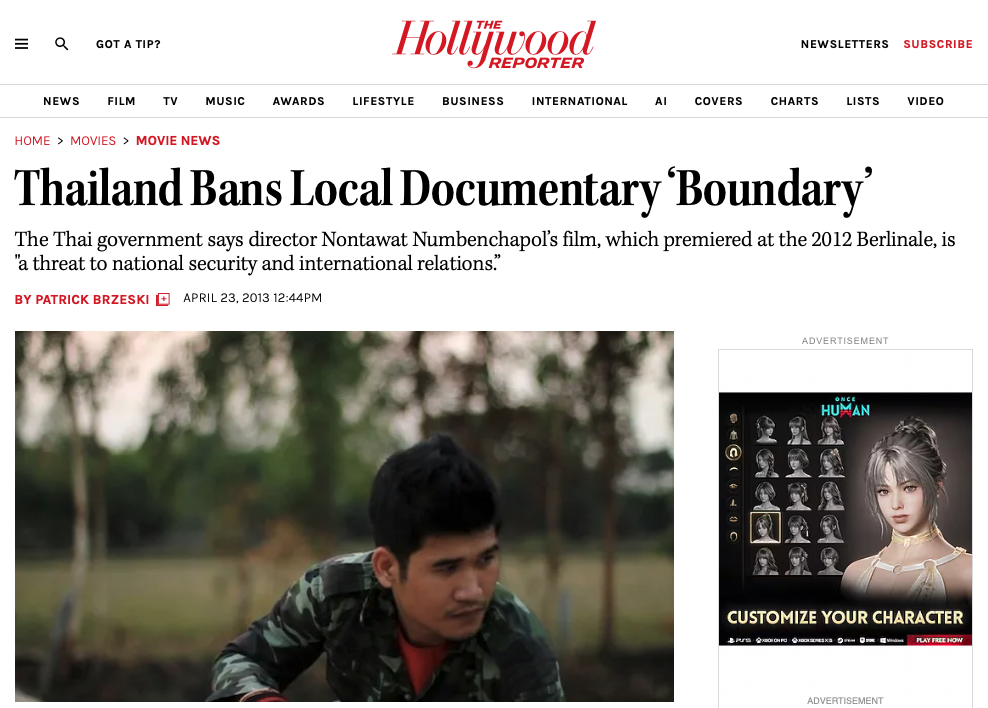
Thai director Nontawat Numbenchapol’s independent documentary Boundary appears to have met one.
The Thai government announced a countrywide ban on the film Tuesday, saying its content is “a threat to national security and international relations.”
A modestly budgeted art-house doc, Boundary premiered at the Berlin International Film Festival in February. The film begins with footage of the so-called “red shirt” political protests that paralyzed Bangkok in 2010 and resulted in an armed standoff and the deaths of nearly 100 people. Nontawat then zeros in on one of the soldiers involved in the dispute and follows him to his hometown along the Thailand-Cambodia border, an area that has long been the focus of an occasionally violent border dispute between the two countries.
Conversations between the soldier, Nontawat and Cambodian and Thai villagers are overlaid upon scenes of the rural countryside, glimpses of damage wrought by the conflict and shots of an historic, 1,000-year-old Hindu temple, which both Thailand and Cambodia claim as their own, and which has often served as the fulcrum of the ongoing border spat.
On April 15, the UN’s International Court of Justice began a hearing over the temple and the surrounding area depicted in Boundary. Fighting in the region left 18 people dead and thousands of villagers displaced in April 2011. Thailand and Cambodia both made their cases for claim to the territory last week and are currently awaiting the UN high court’s decision, hoping for a resolution. Apart from the territorial issue, relations between the two countries are mostly positive, and they remain strong trading partners.
“I really didn’t expect this film to be banned,” Nontawat told The Hollywood Reporter. “Everyone I’ve spoken with who’s seen it says the film shows the point of view of every side, and that the film is neutral. My intention was to let the film be a space for the people in the troubled territories to voice their views and feelings to the outside world — which they haven’t had a chance to express in other Thai media.”
Referring to either the Red Shirt protests from 2010, or the border dispute with Cambodia — or both — the Thai Ministry of Culture division that issued the ban, added: “The film presents some information on incidents that are still being deliberated by the Thai court and that have not yet been officially concluded.”
Representatives from the Thai government were not immediately reachable for comment.
Thailand has a ratings classification system, but films can still be outright denied for mass consumption. Such bans are relatively rare, but there have been notable incidents, such as the barring of Palme d’Or winner Apichatpong Weerasethakul’s Syndromes and a Centuryin 2007, and Tanwarin Sukkhapisit’s Insects in the Backyard (2010), a drama about a self-destructive transsexual raising two teenagers who turn to prostitution. More recently, Thailand banned local director Ing K‘s Shakespeare Must Die (2012), which was billed as a Thai adaptation of Macbeth with contemporary political overtones. At the time, the government said its content “causes divisiveness among the people of the nation.”
Hollywood has fared comparatively better in recent years. Despite some local outcry over the Hangover 2’s stereotypical portrayal of the country as a place of prostitution and seedy intrigue — along with a fight scene set in a Buddhist monastery, which some in the Buddhist-majority country found blasphemous — the film was given the official thumbs-up for screening.
Nontawat says he and his producers were planning a limited release for Boundary at a few independent cinemas in Bangkok. The director says he now plans to appeal the ruling with the country’s National Film Board, but he is not optimistic for a reversal.
“Before Boundary, Insects in the Backyard and Shakespeare Must Diewere banned, and they both went to the administrative court, but they still haven’t gotten an answer,” he said. “I think it’s useless to appeal, but what else I can do?”
April 2013
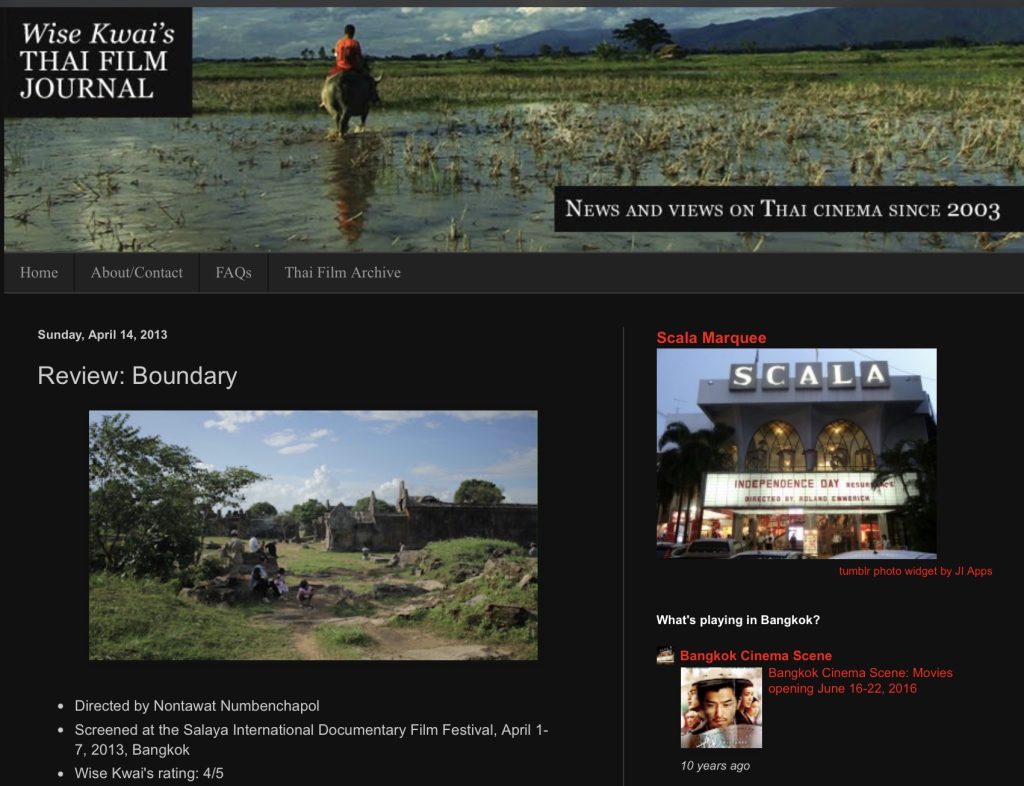
The thorny topic of Thailand and Cambodia’s border dispute around the ancient Preah Vihear temple is made much more interesting and easily digestible when it’s set to an indie rock and electronica music soundtrack.
In Boundary (ฟ้าต่ำแผ่นดินสูง, Fahtum Pandinsoong), filmmaker Nontawat Numbenchapol approaches his subject with the artful aesthetic that’s the calling card of other indie Thai filmmakers, with static camera set-ups, tracking shots in cars, slow-mo and blurs offering comment on the subject matter.
Known for his debut Weirdrosopher World, a documentary about Thai skateboarders, Nontawat apparently stumbled on the Boundary story by chance, at the New Year’s Eve celebration at the end of 2010. By coincidence, it was at Bangkok’s Ratchaprasong intersection, which earlier in the year had been occupied by the “red shirt” protests that ended badly, with dozens fatally shot by government forces and arson attacks. There, at the New Year’s countdown, he met a soldier on leave who was headed to his village in the Thai-Cambodian border area. Nontawat asked if he could tag along.
Politics are an unavoidable subtext to the images that the camera captures of a road trip from Bangkok to northeastern Thailand, accompanied at times by pulpy-sounding electronica beats.
A contentious topic for decades, Preah Vihear was awarded to Cambodia in a 1962 International Court of Justice verdict. The simmering border dispute boiled up again around 2008 when the Thai government at the time supported Cambodia’s bid for Unesco World Heritage status for the temple. It would benefit both sides, and boost tourism was the reasoning. But the move riled the royalist “yellow shirts”, who played the nationalist card and used Preah Vihear as a political cudgel. At issue is a disputed 4.6 square kilometer area around the temple that some contend is Thai soil. The yellow shirts conducted a campaign of activism that stirred things up and eventually resulted in the Thai and Cambodian sides sending in troops and lobbing shells at one another.
Popular YouTube footage from one of the firefights, looking like a grainy outtake from Full Metal Jacket, is included in Boundary.
Nontawat kept out of the line of fire, but visited spots that had been shelled. He accompanies Royal Thai Army officers has they inspect damage, including a rice granary that’s had its roof smashed, a bullet-pocked house and a vehicle with holes in it that aren’t decals. Another scene shows a school that had its roof damaged by the shelling.
His interviews with Thai residents reveal their upset about the hostilities at the border and being dragged into the dispute by the yeller shirts. They had enjoyed a good living off the tourism trade, and selling things on the Cambodian side of the border.
They also expressed indifference and perhaps disdain for the color-coded shirt movements. At dinner one night, it’s pointed out the hostess is wearing yellow, while another at the table is in red. “I am wearing no shirt,” the man of the house says. “I am too poor.”
Given an “in” to Cambodia by one of his producers, French-Cambodian filmmaker Davy Chou (Golden Slumbers), Nontawat also sought the other side of the story. Thai film expert Donsaron Kovitvanitcha is another producer, making Boundary a Thai-Cambodian production.
In his talk at Boundary‘s April 6 screening at the Salaya International Documentary Film Festival (it had its Thai premiere on April 1 as Salaya Doc’s opening film), Nontawat explained he had to tread lightly because Cambodians are generally suspicious of Thais. He didn’t want to end up like pair of yellow-shirt activists who were jailed as spies (a topic not covered in the film). So he posed as a Chinese-American student and got his interviews, which are punctuated by a toddler boy bouncing up and down on his toy car until he falls on his rear and bursts into tears.
In the end, Nontawat finally visits the temple itself, which is dramatically situated right on the border, on the shoulder of a mountain, overlooking the Cambodian valley below. I went there 12 years ago, and the only way in was through Thailand on a chicken bus from Aranyaprathet. Now there’s a sturdy road on the Cambodian side, which winds its way up the rugged slopes of the Dangrek Mountains, finally connecting the Angkorian treasure to the country that lays claim to it.
Boundary is one of those rare Thai political films. Most don’t end up getting a general release, but Boundary might be okay because the opinion from the Thai side of the border tends jibe with that of the “red shirts” and the sympathies of the current government.
While the documentary makes things clear, the reality of the situation is cloudy. Just as Boundary is beginning to be screened in Thailand, the International Court of Justice is holding hearings about the Preah Vihear issue. Cambodia called for the hearing in the face of the yellow-shirt activism, and will ask that the ICJ reinterpret its 1962 ruling. For its part, the Thai side says there is no dispute and asks that the case be thrown out.
It’s not expected to go well. Protests by the Thai interests are expected, adding much tension an already politically tense time.