May 2026

TFL Next – Feature Film 2026

So excited to share that our new film project, Ray of Light (working title) with Tanida Hantaweewatana as writer and produced by Awat Ratanapintha has been selected from over 300 submissions! We’ll be joining the TorinoFilmLab TFL Next – Feature Film 2026 for a script development workshop based on our treatment.

We’ve been quietly working on this for over a year. A massive thank you to THACCA and the Ministry of Culture for the script development grant that kept our energy up. Big thanks also to Thaipitch, Raymond, Don, and P’Nuch for selecting us for Cannes, which really sparked our fire to submit our project internationally again.

Without that early support, we wouldn’t be here today telling ourselves, “It’s time to get this done.” I really hope the new government continues to consistently support Thai cinema.

Lastly, huge thanks to our interns Ping, Tarntham, and Pizza for brainstorming and bouncing ideas around with us!

Stay tuned!

More info…

November 2025

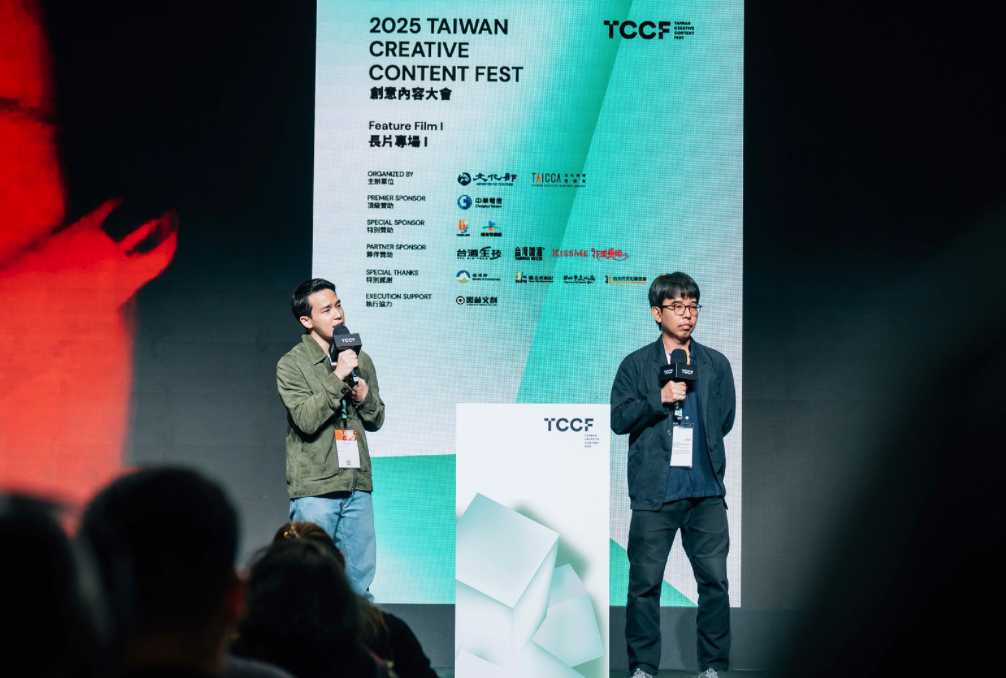
Ray of Light to be Showcased at the TCCF Pitching Event

The Taiwan Creative Content Fest (TCCF) has officially unveiled its exclusive lineup for the TCCF Pitching showcase. The competition was incredibly fierce this year, with nearly 700 submissions from 44 countries, but only 94 outstanding projects were selected to participate in the event from November 4 to 7!

We are absolutely thrilled to share that our Thai and Singapore joint production, Ray of Light, successfully broke through the intense competition! It has been officially selected as one of only 20 feature film projects to be showcased in the highly anticipated Project segment.

The dedicated team behind this project includes:

  • Director: Nontawat Numbenchapol

  • Producers: Awat Ratanapintha, Tan Bee Thiam, and Looi Wan Ping

  • Writer: T. Hantaweewatana

  • Production Companies: Mobile Lab Project and 13 Little Pictures

This year TCCF is heavily emphasizing the global trend of international collaboration. The selection of Ray of Light marks a major milestone, proving the immense potential and international appeal of the film. Please continue to send your support and stay tuned as we take this exciting journey to the global market!

October 2025

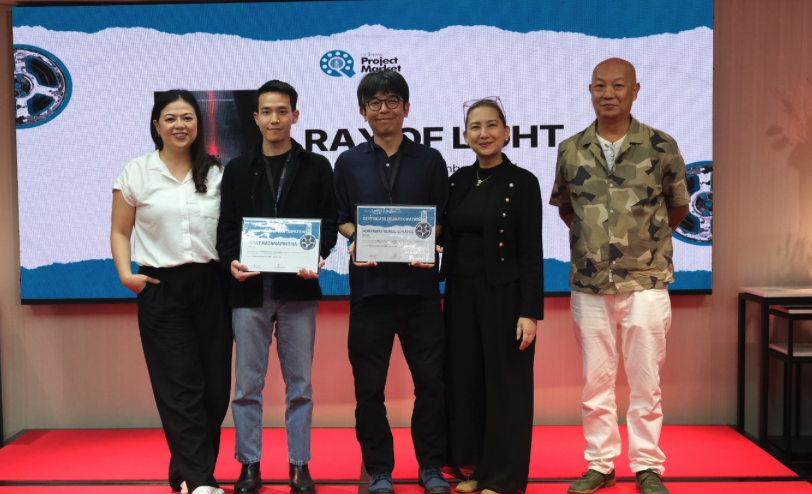
Ray of Light Chosen for the QCinema Project Market Lineup

The Thai psychological thriller and romance drama film project, Ray of Light, directed by Nontawat Numbenchapol, has achieved another major milestone by being officially selected for the highly esteemed QCinema Project Market (QPM) in the Philippines.

As the industry wing of the QCinema International Film Festival, QPM is celebrated for championing bold voices, distinctive genres, and globally resonant stories. This year the selection process was highly competitive, with 71 submissions from across Southeast Asia. Ray of Light is honored to be chosen as one of only 20 exclusive film projects, and one of just eight selected from neighboring countries outside the Philippines.

Being recognized on this platform is a significant step forward, elevating the film to new heights on the international stage. Please continue to follow and support the journey of Ray of Light.

September 2025

SCREEN DAILY : Ray of Light to be Showcased at the TCCF Pitching Event

Taiwan Creative Content Fest (TCCF) has unveiled a bumper line-up of 94 projects to take part in its TCCF Pitching showcase, set to run November 4-7.

This year’s lineup features several cross-border adaptations of renowned IPs and international co-productions with strong market potential and international appeal, reflecting an ongoing global trend.

These include Taiwan Travelogue, a series adapted from Yang Shuang-zi’s award-winning novel of the same name; The Ones I Killed And The Ones Who Killed Me, a series adapted from Akira Higashiyama’s acclaimed novel; LOMÁ, a documentary from Berlinale Teddy award winner Huang Hui-chen; and animation A Banquet For Hungry Ghosts, adapted from Asian American food writer Ying Chang Compestine’s young adult horror story collection.

Some 56 titles will be showcased in the Project segment, including 20 feature films, 10 projects apiece for series, animations and documentaries as well as a further six series with the theme of “If Romance Comes Again”.

Scroll down for feature film Project titles

Among the highlights from the Project segment are Spent Bullets, adapted from Tetsuya Terao’s bestselling novel by Taiwanese filmmaker Henry Tsai; Goodbye My Love, Calendar Studios’ Taiwanese version of Korean drama Do It One More Time; Diary Of Summer from Japan’s Robot Communications, the production company behind Godzilla Minus One; documentary Atomic Paradise, headed by Sally Aitken, a two-time Emmy nominee; and drama series Second Woman, winner of both the FriDay Video Original Story Award and TVBS Storytelling Impact Grant Award in the Story to Screen segment of TCCF in 2023.

Several titles from the Project segment have also made it into this year’s Golden Horse Film Project Promotion, including two series (Taiwan Travelogueand The Ones I Killed And The Ones Who Killed Me) and four feature films (Burning Blossoms, Spent Bullets, Soul Lantern and Spring’s Grocery).

A further 38 projects of original published texts will be presented for IP adaptations in the Story segment.

Highlights include A Sketch Of A Female Serial Killer: Taiwan’s Only Female Death Row Prisoner And The Murders That Shocked a Nation, winner of the Taipei International Book Exhibition Grand Prize in the non-fiction category; Bodacious! Archdemons and Lifesaver Deployed, both of which are also selected for the upcoming Busan Story Market; and The Taste Of Brown Sugar, winner of the 2025 Taipei International Book Exhibition Grand Prize in the children’s book and young adult novels category.

TCCF Pitching received nearly 700 submissions from 44 countries this year and is set to be held at Taipei Nangang Exhibition Center. Aside from Taiwan, the top submitting countries were Japan, Thailand, the US, South Korea and Singapore. International submissions and co-productions involving Taiwan accounted for 60% of the entries, underscoring TCCF’s growing recognition on the global stage and a trend of cross-border collaboration in the content industry.

TCCF Pitching Project titles (feature films)

Burning Blossoms (Tai-Japan)
EP. Hitoshi Endo
Pro. Nobu Awata
Wri. Su I-Hsuan
Prodco. Suz Creative Studio

Diary Of Summer (Japan)
Dir. Remi Noda
Pro. Yusuke Yagi
Wri. Remi Noda
Prodco. Robot Communications

Fortune Seekers (Thai)
Dir. Yanyong Kuruangkura
EP./Pro. Nakarin Narkpreecha
Wri. Ploibutsara Phattrapornphisit
Prodco. Bebrave Entertainment Hub

Game Never Over (Tai)
Dir. Sean Chuang
EPs. Stefano Centini, Chang Chuti
Pro. Hung Sung-Ju
Wri. Ho Shing-Ming
Prodco. Volos Films

Goodbye My Love (Tai)
Dir. Yin Chen-Hao
EP./Pro. Jin Pai-Lunn
Wri. Ryan Tu
Prodco. Calendar Studios

Kamol (Thai)
Pro. Supatcha Thipsena
Wri. Chartchai Ketnust, Kong Pahurak
Prodco. White Light Studio

Love Letters From Tomorrow (Tai-Japan-S Kor)
EP. Peter Choe
Pros. Hsieh Yi-Lin, Ianne Cha
Wri. Yossef K. & Orign Pictures, Anne Wang
Prodco. Yoosonn Entertainment, Blintn

Midnight Express (Japan-HK-Thai-Malay-India-Uzbek-Turk-Greece-It-Fr-Sp-Port)
EP. Yamaguchi Shin
Pros. Abe Yoko, Sekiguchi Mio
Wri. Uchida Eiji, Mineo Kento
Prodco. Knockonwood

Mother Tongue (Japan-Tai)
Dir./Wri. Fu Tien-Yu
EP. Shinji Ogawa
Pro. Shoko Miyamori
Prodco. Bridgehead Co.

Mother’s Neck (Sing-Tai)
Dir. Yc Tom Lee
EPs. Jordan Lim, Charlyn Ng
Prod. Charlyn Ng
Wri. Nicholas Wang
Prodco. Juo Studios, Kusu Films

Naked In Glendale (US-China)
Pros. Jane Zheng, Julia Xu
Wri. Haohao Yan
Prodcos. Seesaw Productions, Q&A Entertainment

One Fine Day (Malay-Tai)
Dir. Tan Seng Kiat
EP. Sylvia Chang
Pros. Elyce Chin, Lim Shu Jia, E.N. Lee
Wri. Leong Siew Hong
Prodcos. One Fine Day Production House, Sunshine And Moonlight

Pivot (Tai-Turk-Ger-Serb)
Dir. Melisa Önel
Pros. Alara Hamamcıoğlu, Wesley Ko
Wri. Feride Çiçekoğlu
Prodcos. Awesomework S Production, Vigo Film, Aniden Film, Digitalkraft, Electric Sheep

Ray Of Light (Thai-Sing)
Dir. Nontawat Numbenchapol
Pros. Awat Ratanapintha, Tan Bee Thiam, Looi Wan Ping
Wri. T. Hantaweewatana
Prodcos. Mobile Lab Project, 13 Little Pictures

Seoul Story (S Kor)
EP. Summer Noh
Pro. Mark Brazeal
Wri. Kim Taeyang
Prodco. Milkyway Cinema

Soul Lantern (Tai)
Dir. Danny Tseng
EP. Lester Hsi
Pro. Fiona Hu
Wri. Jen-Fang Wang
Prodco. D-Day Pictures

Spent Bullets (Tai-US)
Dir. Henry Tsai
Pro. Jacqueline W. Liu
Wri. Henry Tsai, Terao Tetsuya
Prodco. Each Other Films

Spring’s Grocery (Tai-Indo)
Dir. Pan Ke Yin
EPs. Janice Chua, Cora Yim
Pro. Holly Chan
Wri. Aurora Lee

Prodco. Neverland Entertainment

The Daughter (Tai-HK)
Dir./Wri. Guan Tian
Pros. Patrick Mao Huang, Vivian Bao, Ding Ningyuan
Prodco. Flash Forward Entertainment, Uluka Productions

The Ghost Has A Rifle (Indo)
Dir./Wri. Iqbal Fadly
Pros. George Timothy, Siera Tamihardja
Wri. Cecille Christophia
Prodco. Creative Goods

Screen Daily
September 2025

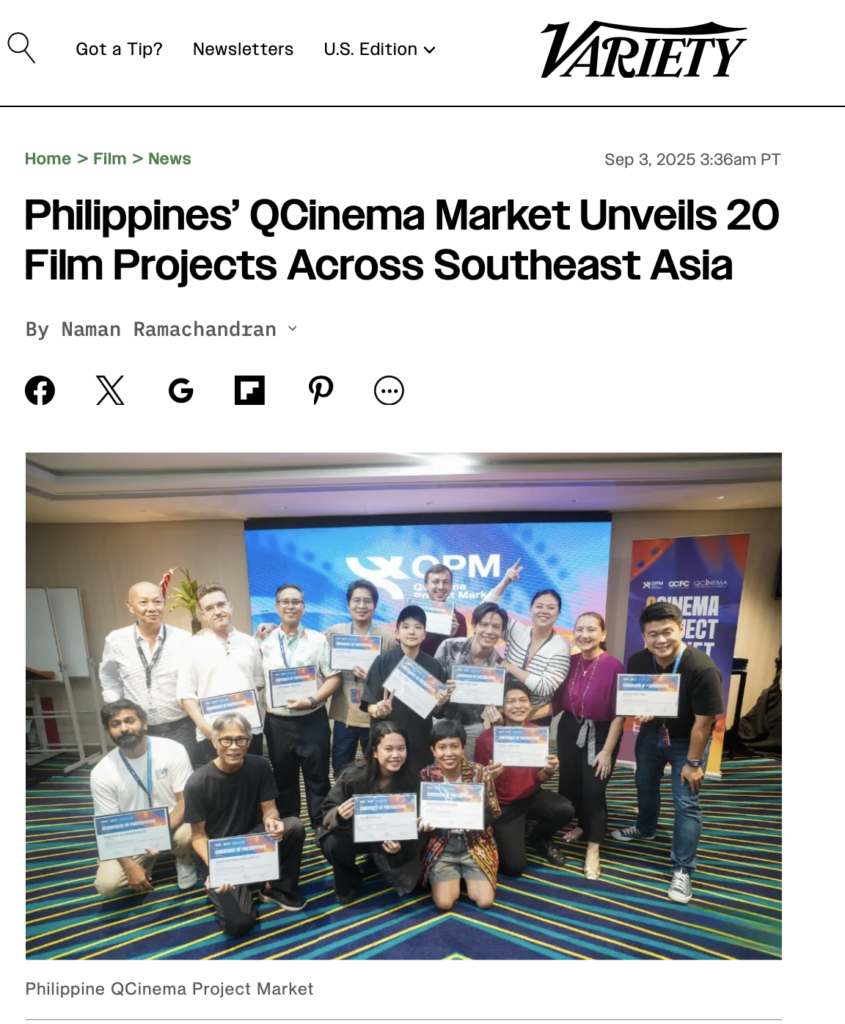
VARIETY : Ray of Light to be Showcased at the QPM

The PhilippinesQCinema Project Market (QPM), the industry wing of QCinema International Film Festival, has unveiled its lineup of 20 selected film projects for its third edition, chosen from 71 submissions across Southeast Asia.

The slate comprises 12 projects from the Philippines and eight from neighboring countries, showcasing what organizers describe as bold voices, distinctive genres, and globally resonant stories.

Several QPM alumni are already making their mark on the international circuit. Malaysian auteur Woo Ming Jin’s “The Fox King” is set to world premiere at the Toronto Film Festival this month, underscoring the market’s role as an incubator for globally competitive works. Alumni also include Dương Diệu Linh’s “Don’t Cry, Butterfly,” winner of the grand prize at Venice Critics’ Week, and Loeloe Hendra’s “Tale of the Land,” which earned the Fipresci Prize at Busan.

“QPM is not just a platform — it’s a bridge,” said QCinema industry head Liza Diño. “By connecting Southeast Asian stories to the wider world, we are giving filmmakers the visibility and access they need to secure funding, partners, and distribution.”

The regional projects span diverse genres and themes. Singapore’s “Penumbra,” directed by Russell Morton and produced by Sophia Sim and Jeremy Chua, follows a man on the run who washes up on a floating fish farm with no means of escape, where he encounters mysterious occupants. From Thailand comes Nontawat Numbenchapol’s “Ray of Light,” a class-divided story set on a present-day film set styled after 1960s glamour, where a puppet-like star actress and an unseen lighting technician form a forbidden bond.

Cambodia’s “Romdoul, the Evening Fragrance,” directed by Lomorpich Rithy, tells the intertwined story of three generations of Cambodian women in a country still haunted by war and silence. Singapore’s 11th-century period fantasy “Strange Root,” directed by Lam Li Shuen and Mark Chua, features a yam-born demigod cast aside when a shipwrecked beast reawakens islanders’ lost desires. Malaysia’s “The Willing,” from director Joon Goh, follows an Indonesian migrant teen forced into underground fights and a schoolgirl trapped by her volatile mother who find sanctuary in each other.

Thailand’s “Ghost of the Currents,” directed by Patiparn Boontarig, centers on a man returning to his Mekong riverside village after a devastating flood, where villagers blame a vengeful River Ghost for the disaster. Vietnam’s “The River Knows Our Names,” directed by Mai Huyền Chi, explores life on the undocumented floating homes of the Mekong through a little girl’s birthday wish. Myanmar’s “When the World is Paused,” from director Han Thit Htoo Aung, spans from 2019 to 2025 as Than Sin falls into a coma before confessing his feelings to Nyein and must find her upon waking.

The Philippine slate showcases the country’s filmmaking diversity. Glenn Barit’s “Luzonensis and Floresiensis” presents two prehistoric hominids from the Philippines and Indonesia meeting as migrant workers in the land of colonizers. Jaime Pacena II’s “Ozzy and Onie” follows two star-crossed lovers in 1996 Manila torn between faith, family, and a collapsing system. Carl Joseph E. Papa’s “Sentinel” connects five lives grappling with fears and loyalties as a student newspaper article threatens to expose dark school secrets.

Jopy Arnaldo’s “KomiXXX” pairs two Filipinos on break from their Japanese film — an aspiring director and a “sexy” actress wanting to star in “serious” films — who come together to make an erotic comic. Sam Manacsa’s “The Void is Immense in Idle Hours” follows 19-year-old Rosemary, the only witness to a young boy’s disappearance, as she’s drawn into the search by the child’s desperate mother Agnes.

Tyrone Acierto’s “What’s Left Of Us” presents a couple and their chronically ill daughter fighting to stay sane in a collapsed world consumed by a dementia-like plague. Dominic Bekaert’s “Daddy Cool” unfolds during martial law in Manila’s disco era as a career woman finds herself in a tangle of love and jealousy with her female boss and their shared gigolo. Dodo Dayao’s “Dear Wormwood” disrupts the quiet lives of four mountain-dwelling women of faith with the arrival of a time-traveling ghost bringing the world to an end.

VARIETY

April 2025

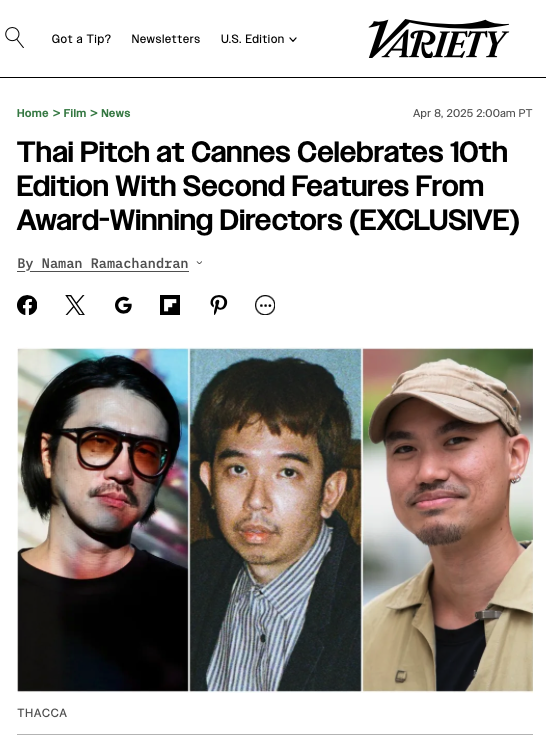
VARIETY : Ray of Light to be Showcased at the Thai Pitch at Cannes program

The Thailand Creative Culture Agency (THACCA) will present three promising sophomore features from acclaimed Thai filmmakers at this year’s Cannes Film Festival, marking the 10th edition of the Thai Pitch at Cannes program.

The pitching event, scheduled for May 19-20 at the Thai Pavilion in Village International, continues its mission of connecting Thai filmmakers with potential investors, co-producers, funders, sales agents, distributors and festival programmers. The initiative has established a strong track record of launching successful Thai productions into the international festival circuit.

Taiki Sakpisit returns with “The Blind Earthworm in the Labyrinth” after his Rotterdam Fipresci Prize-winning debut “The Edge of Daybreak” (2021). The new project follows sisters Chareeya and Chalika who, after their parents’ deaths, become entangled in desire and haunted by memories within Bangkok’s shadowy underworld. Producer Cattleya Paosrijaroen, whose credits include Apichatpong Weerasethakul’s Cannes Jury Prize winner “Memoria,” is attached.

Itt Patiparn Boontarig presents “Ghost of the Currents,” which follows his debut “Solids by the Seashore” (2023) that won multiple awards at the Busan International Film Festival. His new supernatural drama centers on a man who returns to his flood-ravaged Mekong riverside village where locals believe a vengeful “River Ghost” is responsible for the disaster.

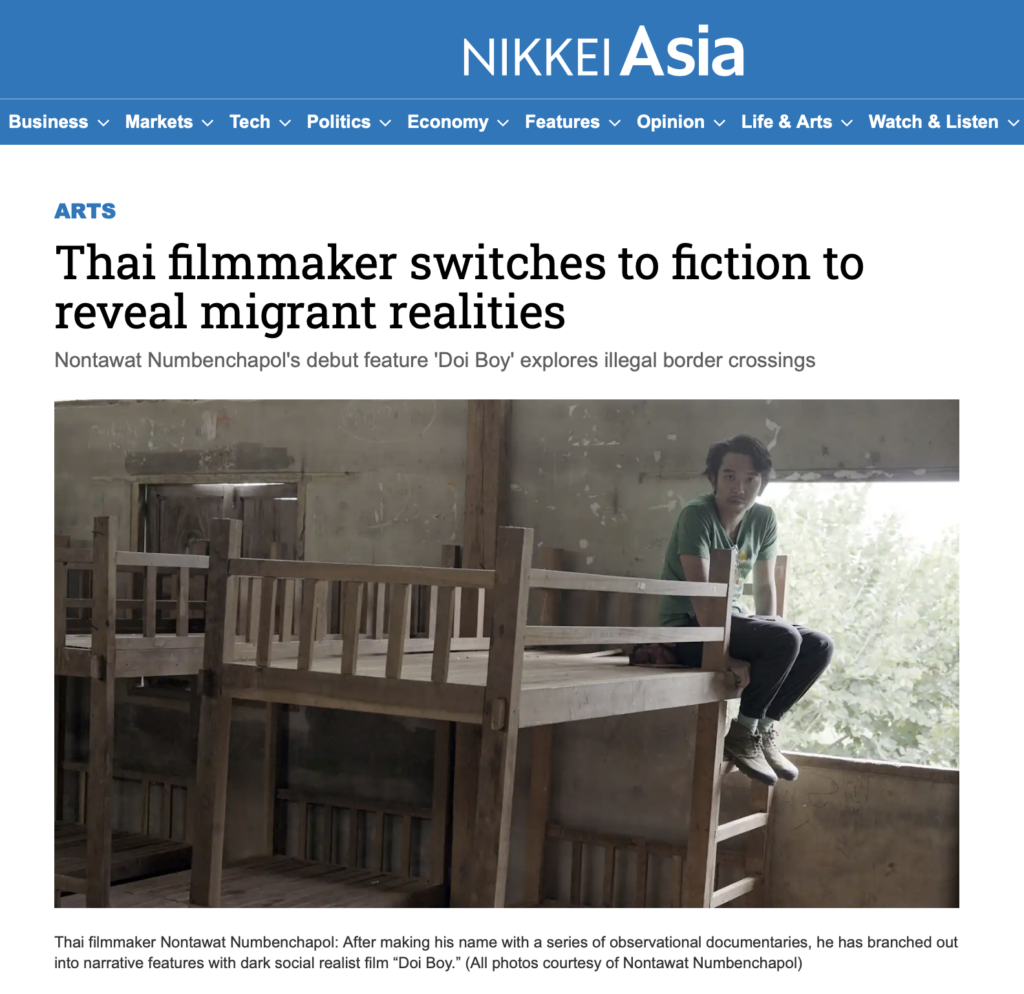
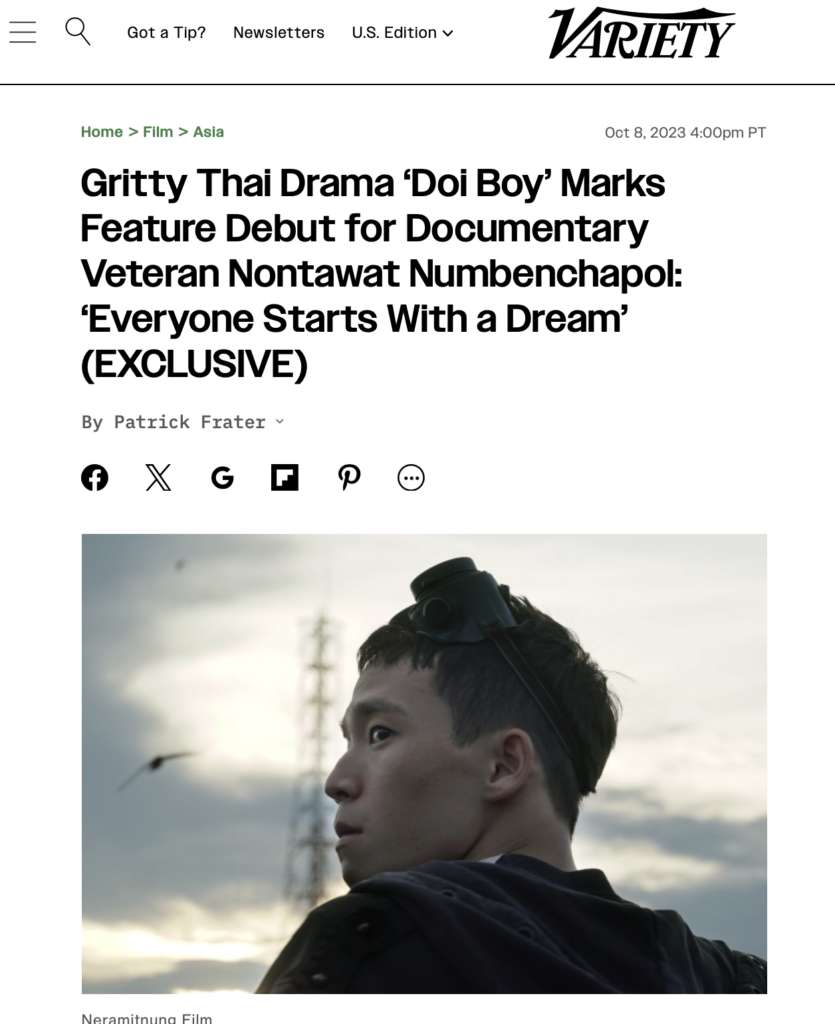
Nontawat Numbenchapol, who successfully transitioned from acclaimed documentary work to fiction with “Doi Boy” (2023), brings “Ray of Light,” a class-conscious drama set on a film production where a lighting technician and leading actress from vastly different worlds briefly connect. Veteran line producer Tanade Amornpiyalerk is producing.

All three projects recently received funding support from THACCA, with selection handled by a committee including Thai filmmaker-producer Pimpaka Towira, World Film Festival Bangkok director Donsaron Kovitvanitcha, and industry veteran Raymond Phathanavirangoon, who will coordinate the Cannes meetings.

Previous Thai Pitch success stories include “Arnold is a Model Student” (2022), “Anatomy of Time” (2021), “Die Tomorrow” (2017), and “Malila: The Farewell Flower” (2017), all of which secured international festival premieres and recognition.

Variety

June 2020

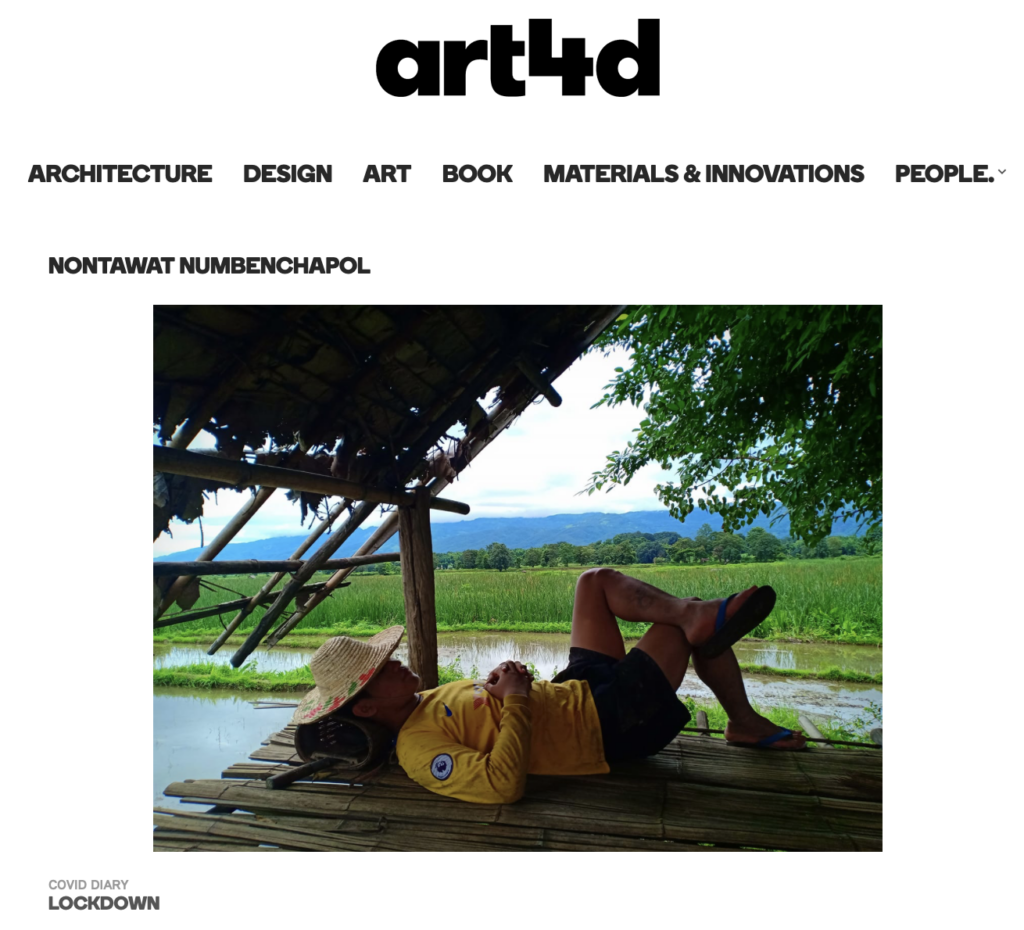
ART4D: COVID DIARY LOCKDOWN

I’ve been telling myself throughout this COVID-19 situation that I’m lucky that the lockdown allows me to stay home and finish editing all my works, after having spent the entire year in researching and producing a great many sources. Among those is what I’ll be presenting at Ver Gallery on July 11.

For this work, I picked one interviewee, out of scores of Burmese immigrants who work at bars and live in Chiang Mai, hoping for better lives.

I became friends with many of them, following their lives from a distance via Facebook feeds. For the one I chose, I offered him what I, and he, wanted the most, taking him across the border back to his hometown in Shan State, after six years away. I asked for his permission to film this.

Editing works, I haven’t set my feet out for a month, feeling I have more time than ever before reconsidering what I’m doing.

I’m still following their lives, at home via Facebook. All of them are unemployed because of the closure of the bars. Many couldn’t go home and need to take any available jobs, mostly daytime construction work—the one in my artwork as well.

Occasionally, I ask him how he’s holding up. He has 200 baht left, having instant noodles with eggs everyday. His Thai girlfriend also works a nightlife job. She’s not qualified for the government’s 5,000-baht relief subsidy, but some of my friends who’re doing much better financially are. I can’t help questioning the management of this relief.

Two months have passed: Thailand’s COVID-19 infection rate is at a satisfactory level; the suicide rate is, though, higher than that of COVID-19 related deaths. This is a fruitful outcome of the government’s masterful restriction of people’s rights by imposing curfews. The total opposite can be said for their people’s management skills, judging from the relief and healing measures. The gaps between social classes have been made clear, and those who don’t have access to resources, in particular, are bogged down and cannot find a possible way to continue living in this area of the Earth called Thailand.

ART4D

October 2017

Bodies of Occupation: Conversation with Nontawat Numbenchapol

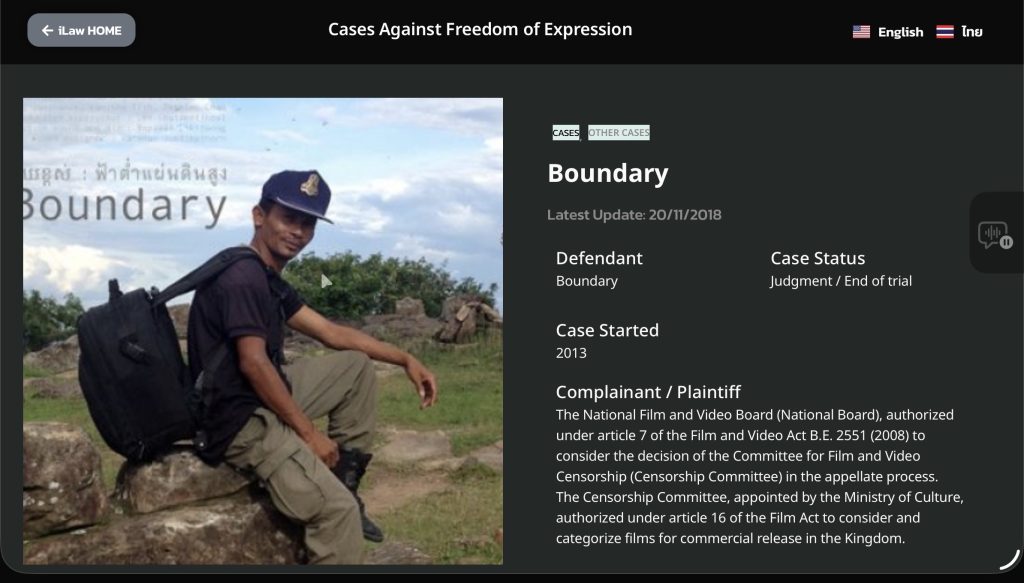
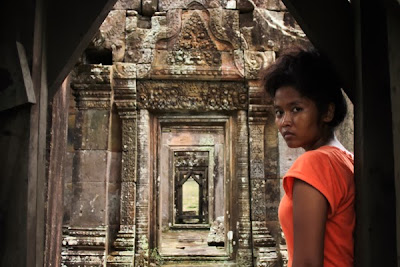
This conversation with the film director Nontawat Numbenchapol on his movie Boundary(2013), which follows a young soldier called in Bangkok to break up the “red shirts” protest (2011) to his hometown in Sisatek, a zone of conflict between Thailand and Cambodia due to the ongoing political dispute between the two countries over the Preah Vihear Temple. Boundary was funded by Busan International Film Festival and Art Network Asia. Numbenchapol received the Young Filmmaker award from the Bangkok Critics Assembly and Boundary screened across many film festivals such as Berlin International Film Festival, International Documentary Film Festival Amsterdam (IDFA), and Yamagata International Documentary Film Festival.

Read more..

November 2013

The Hollywood Reporter : By the River

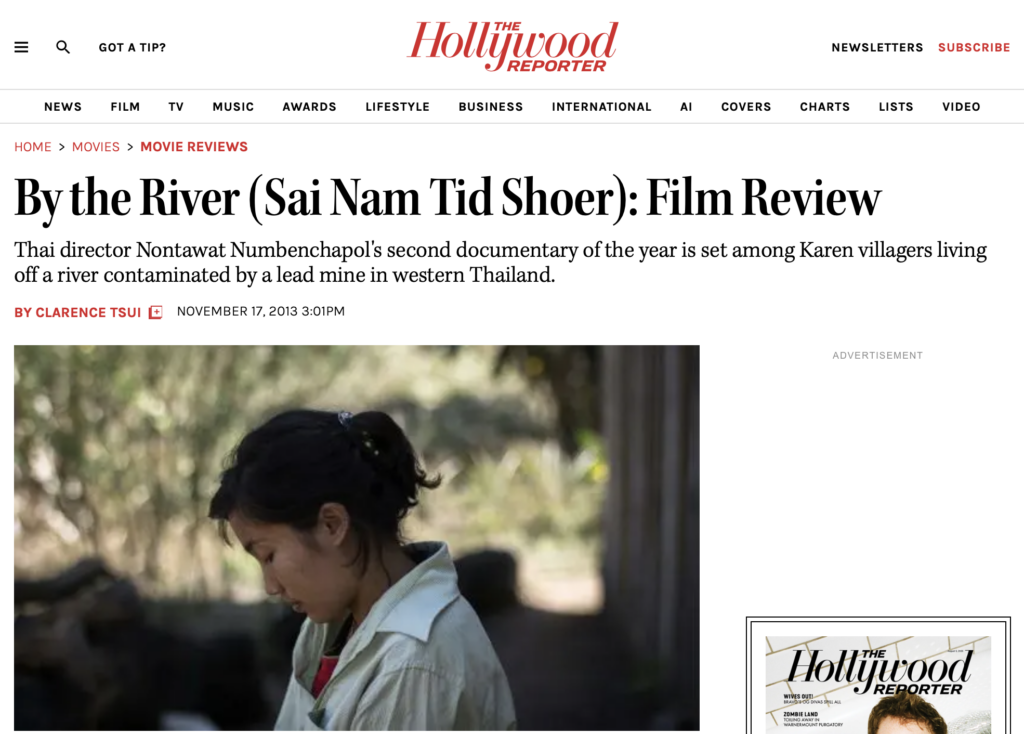
By the River (Sai Nam Tid Shoer): Film Review”
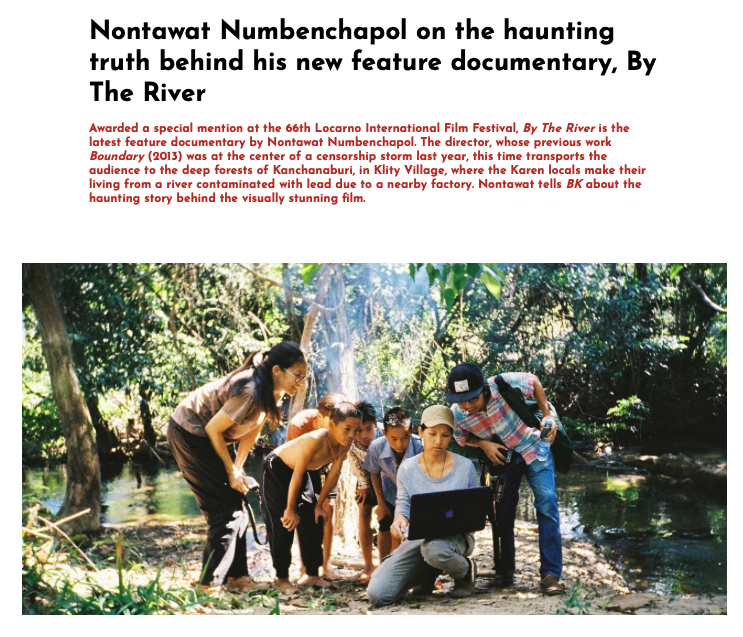
A review of By the River, Nontawat’s documentary on a Karen village living beside a lead-contaminated creek in Kanchanaburi — praised as a quiet, composed meditation on rural lives and environmental injustice.

Just months after gracing the Berlinale with Boundary – a documentary which touches on the once-deadly and still-festering frontier row between Thailand and Cambodia – Nontawat Numbenchapol has swiftly reappeared with yet another piece digging into yet another controversy set in his home country’s far-flung borderlands: By the River revolves around a village in western Thailand still reeling from the ecological disaster brought about by contamination from a leaking lead mine.

Not that By the River will be troubling Thai censors as Boundary did back in April though, when the film was initially banned from domestic release before the authorities backtracked two days later and granted permission for screenings: the issue at hand here is certainly less politically sensitive here, and Nontawat’s treatment also leans towards the contemplative and poetic than his previous film which, though hardly a hard-edged critique on the status quo, comprises mentions of fatalities of a government crackdown on demonstrations in 2010 and also a Cambodian soldier’s condemnation of the Thai government’s military maneuvers.

While certainly made with the palpable aim of raising debates about the environmental catastrophes rural dwellers have endured so as to keep cities (and their social elites) thriving, By the River conducts its argument by revealing gently the lingering pain and anguish beneath lush, pastoral vistas which have seemingly recovered from that deadly eco-calamity 15 years ago. Like Boundary, By the River would certainly build on the acclaim it has already received ever since its premiere at Locarno (where it was garlanded with a Special Mention nod), with its appearances at Yamagata, Hong Kong and (in a fortnight’s time) Luang Prabang signaling more stops on the festival circuit, and also green-themed events beyond Asia.

For the uninitiated, By the River could easily pass off as simply a depictment of rural life in Thailand: it will be nearly halfway into this 67-minute film that a combination of visuals (petitions at the town hall, court hearings) and on-screen text would bring to the fore the sufferings of Lower Klity, where its inhabitants – who belong to the Karen ethnic minority – felt the brunt of toxic waste seeping from a lead mine into the river which their lives depend on.

But the villager’s calm, quotidian existence and quiet laments – a man on crutches speaking to his listless friend about his and others’ physical ailments; a gentle schoolteacher helping local children to learn the alphabet; an old woman talking about her optic nerves shattered by exposure to the poison – only heightens the feeling of a haven lost, with these marginalized and hapless villagers becoming sacrifices for the well-being of the unseen urbanites out there in Bangkok. One of Nontawat’s on-screen texts ruminates how the Karen people’s tribute to their powerful rulers for four centuries is now just repaid by lead – and now these silent sufferings have remained unheard by the center. “Will the waste dumped 30 to 40 years ago finally reach the Gulf of Thailand?” the director asks through another intertitle; By the River is perhaps that catalyst designed to carry this message downwater more rapidly, more urgently.

Given how the catastrophe began because of a river’s flowing currents, Nontawat’s film puts nature and its elements the very center of its visual narrative. Water, of course, is omnipresent; the underwater scenes – in which boys prod the riverbed for fish, an act which also points to possible toxin which might have remained there – provides some kinetic counterpoint to mostly slow-burning sequences, such as the static observations of, say, how human life and poetic scenarios (a reflected moon slowly morphing into something akin an expanding star) burst out of the stream. And then there are the ashes, the remnants of burning embers and also the funereal pyre of a man recently deceased.

While Nontawat sometimes errs towards an excessive mournful tone (he could easily have cut back on the use of the fade-to-black) but By the River remains an enchanting piece which could bring forth more awareness of misery in the margins – which the Karen people are certainly confined to, an issue which has also been raised in October by Sopawan Boonnimitra and Peerachai Kerdsint‘s Busan festival entry The Isthmus. But while the latter is mired mid-way in between direct political engagement and melancholic meanderings, Nontawat’s offering goes straight for the unsaid to nudge people towards social advocacy, with engaging results.

Venue: Hong Kong Asian Film Festival
Production Companies: Ok-Pi-Dern and Mobilelab
Director: Nontawat Numbenchapol
Co-producer: Theepisit Mahaneeranonit
Executive Producers: Krittavit Rimtheparthip, Somchai Suwanban
Cinematographers: Withit Chanhamarit, Nontawat Numbenchapol, Grisda Saisungchalao, Gumpa Funfeo, Vichai Ogan Nasuanbarisut
Editor: Wasunan Hutawet
Music: Karen Musicians, Uncle Pachong, Auntie Meaonong In Karen and Thai
67 minutes

Hoolywood Reporter

August 2013

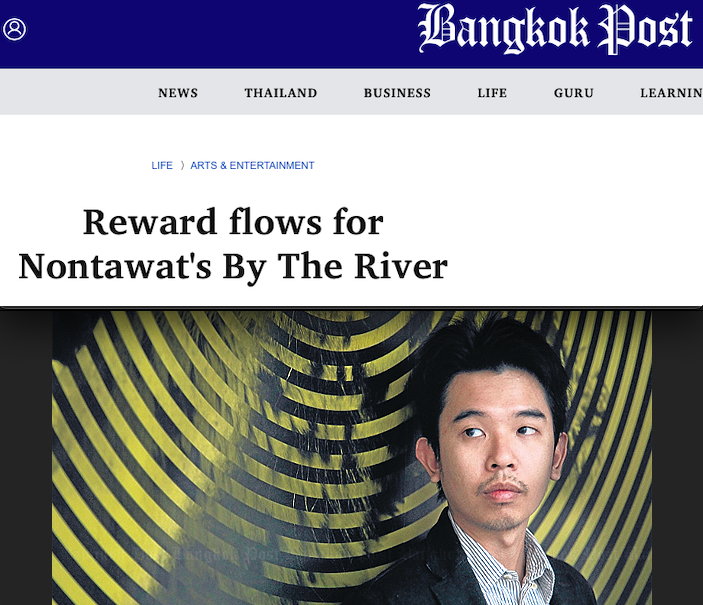
Bangkok Post : Reward flows for Nontawat’s By the River

After a rough start, Nontawat Numbenchapol is enjoying a rewarding year. On Sunday, the 66th Locarno International Film Festival in Switzerland, one of Europe’s oldest cinefests and a much-respected jamboree of art-house movies, awarded a Special Mention prize to his new film By The River, which tells the story of Lower Klity village in Kanchanaburi province, where residents have been affected by lead poisoning incidents.

The film’s Thai title is Maenam Tid Chua, or literally “infected river”. The version that won the prize in Locarno runs slightly over one hour, but the film was originally conceived and broadcast for the Thai PBS channel. The television version, which aired a few months ago, was only 22 minutes long.

The director, along with his producer at Ok Pai Dern company, will explore the possibility of releasing the full version in cinemas.

The Karen village of Klity has been in the news for decades after its main creek suffered lead contamination, a disastrous result of mining since the 1970s, which has seriously threatened the lives and well-being of villagers.


After lengthy legal battles, last year the Supreme Court made an important ruling by ordering the Pollution Control Department to clean up Klity Creek.

By The River, however, tells the story with the eye of an impressionist painter: the film largely consists of tranquil, breathtaking shots of the nature around the village, with minimal dialogue that only alludes to the fatal aftermath of the environmental horror. Children play and young men in the village still go spear-fishing _ and one of them becomes the latest victim of the contaminated creek that looks so inviting on the surface.

There’s only one section of the film that captures the scenes at a Bangkok court when the Karen villagers arrive for the hearing.

This is the second Nontawat documentary film to make the news this year.

On April 30, the director found himself in one of the year’s most perplexing headlines: his documentary film Boundary (Fah Tam Pandin Soong), which discusses the Thai-Cambodian border conflict, was banned by Thai censors _ only to be un-banned and cleared for screening two days later.

The film board even apologised to the director and said a “technical error” led to its initial decision.

Boundary had a limited release in cinemas in June.

By The River won the prize in the Cinema of the Present section, which focuses on young and up-and-coming filmmakers.

_ Kong Rithdee

Bangkok Post


April 2013

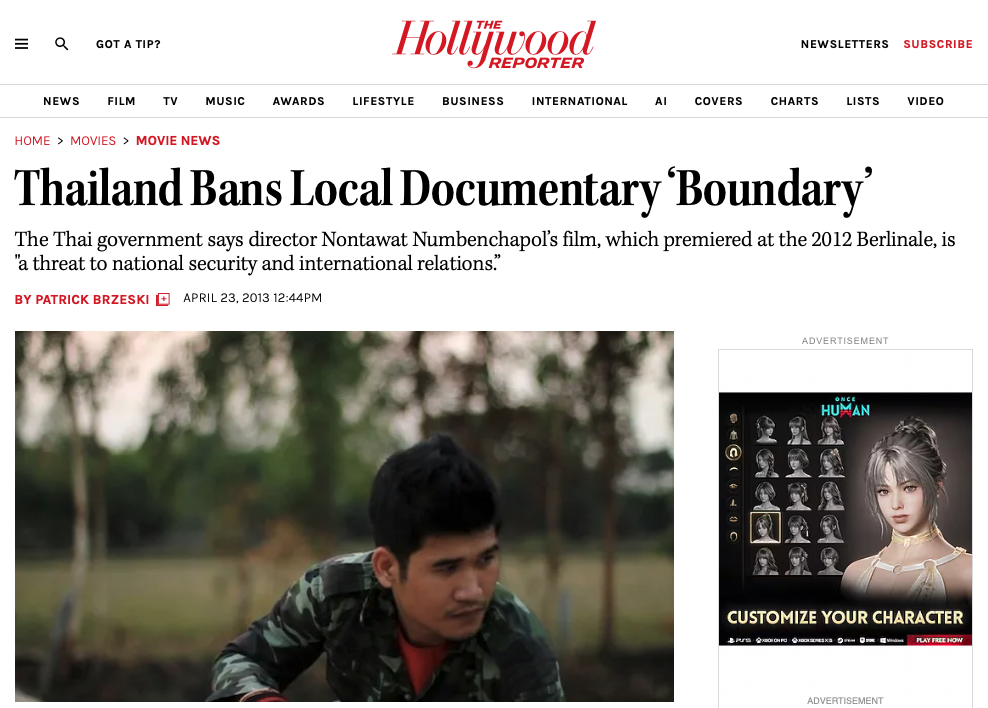
Hollywood Reporter : Thailand Bans Local Documentary ‘Boundary’

Thai director Nontawat Numbenchapol’s independent documentary Boundary appears to have met one.

The Thai government announced a countrywide ban on the film Tuesday, saying its content is “a threat to national security and international relations.”

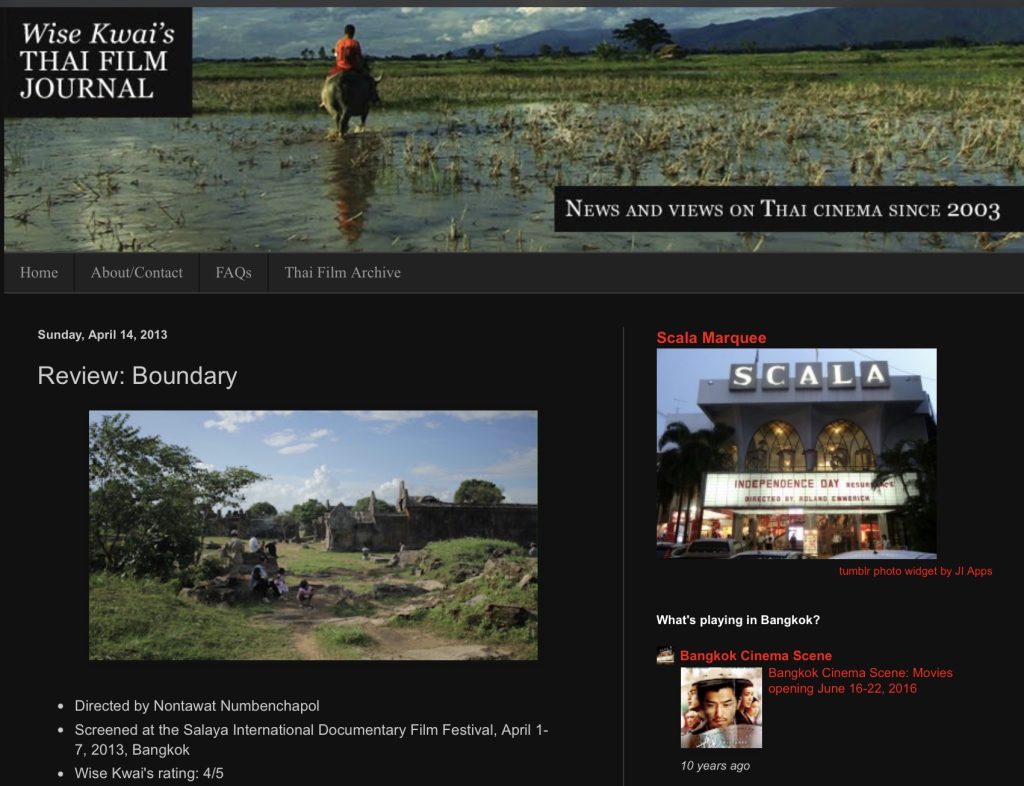
A modestly budgeted art-house doc, Boundary premiered at the Berlin International Film Festival in February. The film begins with footage of the so-called “red shirt” political protests that paralyzed Bangkok in 2010 and resulted in an armed standoff and the deaths of nearly 100 people. Nontawat then zeros in on one of the soldiers involved in the dispute and follows him to his hometown along the Thailand-Cambodia border, an area that has long been the focus of an occasionally violent border dispute between the two countries.

Conversations between the soldier, Nontawat and Cambodian and Thai villagers are overlaid upon scenes of the rural countryside, glimpses of damage wrought by the conflict and shots of an historic, 1,000-year-old Hindu temple, which both Thailand and Cambodia claim as their own, and which has often served as the fulcrum of the ongoing border spat.

On April 15, the UN’s International Court of Justice began a hearing over the temple and the surrounding area depicted in Boundary. Fighting in the region left 18 people dead and thousands of villagers displaced in April 2011. Thailand and Cambodia both made their cases for claim to the territory last week and are currently awaiting the UN high court’s decision, hoping for a resolution. Apart from the territorial issue, relations between the two countries are mostly positive, and they remain strong trading partners.

“I really didn’t expect this film to be banned,” Nontawat told The Hollywood Reporter. “Everyone I’ve spoken with who’s seen it says the film shows the point of view of every side, and that the film is neutral. My intention was to let the film be a space for the people in the troubled territories to voice their views and feelings to the outside world — which they haven’t had a chance to express in other Thai media.”

Referring to either the Red Shirt protests from 2010, or the border dispute with Cambodia — or both — the Thai Ministry of Culture division that issued the ban, added: “The film presents some information on incidents that are still being deliberated by the Thai court and that have not yet been officially concluded.”

Representatives from the Thai government were not immediately reachable for comment.

Thailand has a ratings classification system, but films can still be outright denied for mass consumption. Such bans are relatively rare, but there have been notable incidents, such as the barring of Palme d’Or winner Apichatpong Weerasethakul’s Syndromes and a Centuryin 2007, and Tanwarin Sukkhapisit’s Insects in the Backyard (2010), a drama about a self-destructive transsexual raising two teenagers who turn to prostitution. More recently, Thailand banned local director Ing K‘s Shakespeare Must Die (2012), which was billed as a Thai adaptation of Macbeth with contemporary political overtones. At the time, the government said its content “causes divisiveness among the people of the nation.”

Hollywood has fared comparatively better in recent years. Despite some local outcry over the Hangover 2’s stereotypical portrayal of the country as a place of prostitution and seedy intrigue — along with a fight scene set in a Buddhist monastery, which some in the Buddhist-majority country found blasphemous — the film was given the official thumbs-up for screening.

Nontawat says he and his producers were planning a limited release for Boundary at a few independent cinemas in Bangkok. The director says he now plans to appeal the ruling with the country’s National Film Board, but he is not optimistic for a reversal.

“Before Boundary, Insects in the Backyard and Shakespeare Must Diewere banned, and they both went to the administrative court, but they still haven’t gotten an answer,” he said. “I think it’s useless to appeal, but what else I can do?”

Hollywood Reporter…