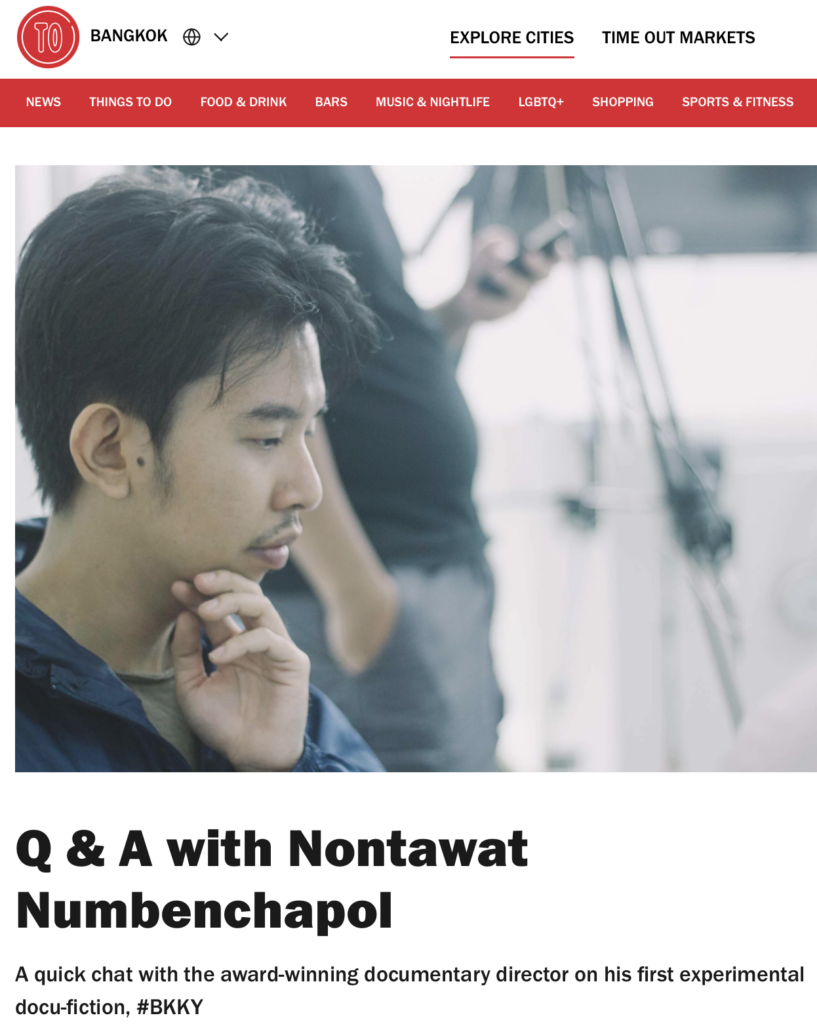
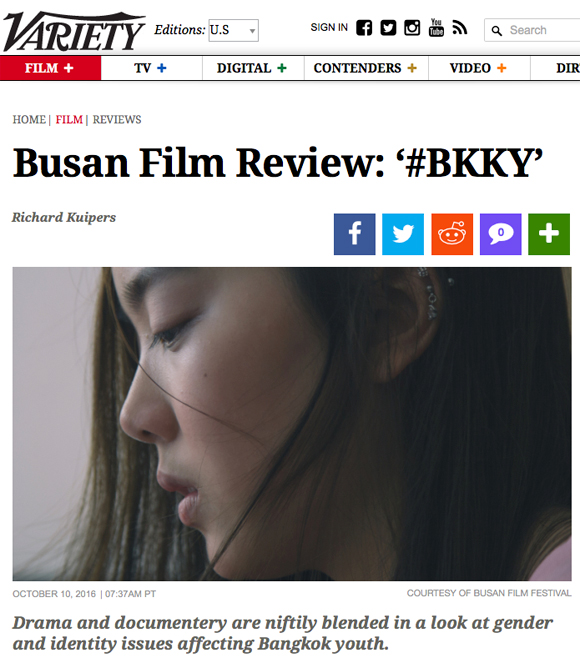
Q & A with Nontawat Numbenchapol A quick chat with the award-winning documentary director on his first experimental docu-fiction, #BKKY
#BKKY is about teenage life and is quite different from your previous works. Why did you decide to make a film on this topic?
I’ve always been interested in making films that I’ve never done before, but are, in some way, still related or accumulated from my old works. I was thinking about an audience that generally doesn’t watch the experimental documentaries I usually make, like teenagers who grew up in the city. So I felt like making a movie for them. I decided to interview 100 Bangkok-based teens on topics like love, dreams, studies, and family to learn more about them.
What did you find out from interviewing these teens?
What’s interesting is that teenagers these days have more digital options from Google to Youtube and Netflix. The rise of the digital age has resulted in individuals who are more grown-up, more confident and [accepting of] more varieties of love. Over 60 percent of those I spoke to consider themselves gender-fluid and base their relationships more on their feelings and less on gender.
What are you trying to express through this film?
I wanted to reflect on what the world has become through the eyes of teenagers. When I spoke with these interviewees, I came to realize that all the problems that I thought were massively huge when I was around their age and had no one to talk to are in fact common issues everybody encounters at a certain age. I’d like teenagers to see the movie and feel like they have a friend who shares the same sort of problems, and probably feel stronger after watching it. I hope [the film] could serve as a platform for generating discussion.
Time Out…