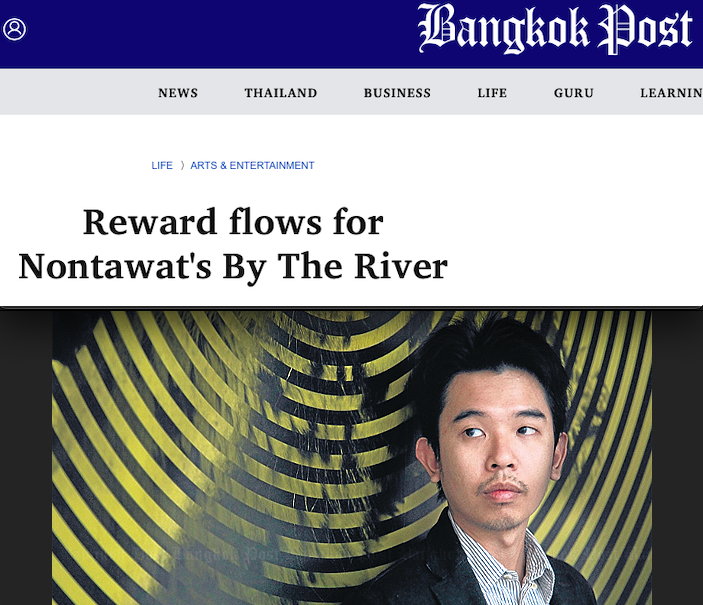
After a rough start, Nontawat Numbenchapol is enjoying a rewarding year. On Sunday, the 66th Locarno International Film Festival in Switzerland, one of Europe’s oldest cinefests and a much-respected jamboree of art-house movies, awarded a Special Mention prize to his new film By The River, which tells the story of Lower Klity village in Kanchanaburi province, where residents have been affected by lead poisoning incidents.
The film’s Thai title is Maenam Tid Chua, or literally “infected river”. The version that won the prize in Locarno runs slightly over one hour, but the film was originally conceived and broadcast for the Thai PBS channel. The television version, which aired a few months ago, was only 22 minutes long.
The director, along with his producer at Ok Pai Dern company, will explore the possibility of releasing the full version in cinemas.
The Karen village of Klity has been in the news for decades after its main creek suffered lead contamination, a disastrous result of mining since the 1970s, which has seriously threatened the lives and well-being of villagers.
After lengthy legal battles, last year the Supreme Court made an important ruling by ordering the Pollution Control Department to clean up Klity Creek.
By The River, however, tells the story with the eye of an impressionist painter: the film largely consists of tranquil, breathtaking shots of the nature around the village, with minimal dialogue that only alludes to the fatal aftermath of the environmental horror. Children play and young men in the village still go spear-fishing _ and one of them becomes the latest victim of the contaminated creek that looks so inviting on the surface.
There’s only one section of the film that captures the scenes at a Bangkok court when the Karen villagers arrive for the hearing.
This is the second Nontawat documentary film to make the news this year.
On April 30, the director found himself in one of the year’s most perplexing headlines: his documentary film Boundary (Fah Tam Pandin Soong), which discusses the Thai-Cambodian border conflict, was banned by Thai censors _ only to be un-banned and cleared for screening two days later.
The film board even apologised to the director and said a “technical error” led to its initial decision.
Boundary had a limited release in cinemas in June.
By The River won the prize in the Cinema of the Present section, which focuses on young and up-and-coming filmmakers.
_ Kong Rithdee